Does Laser Tattoo Removal Work Completely?
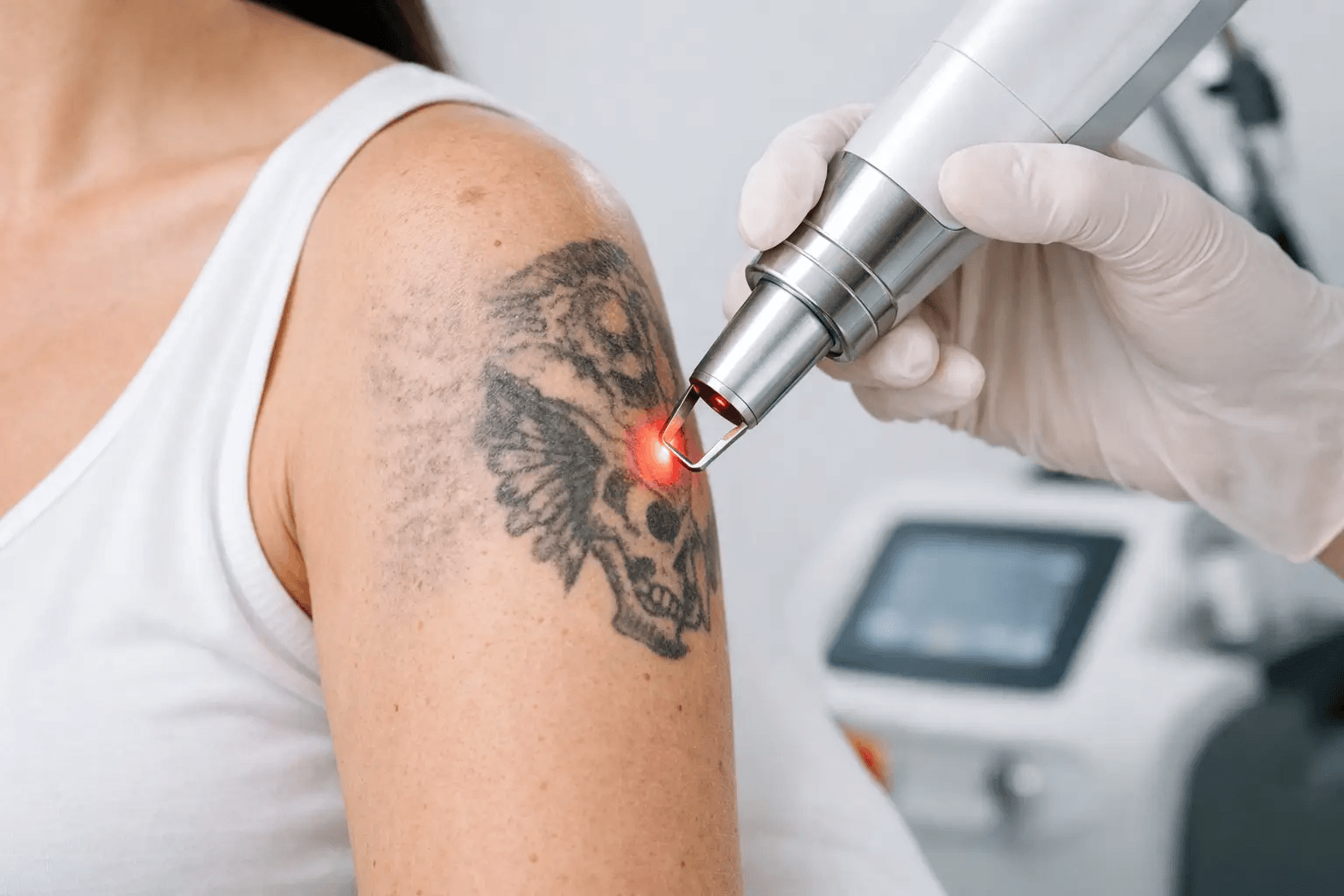
A tattoo can feel very different years after it was done. Perhaps the design no longer reflects you, the placement affects how you dress for work, or you want clean skin before making a new choice. So, does laser tattoo removal work completely? Often, yes! But complete clearance is a realistic goal, not a promise that can be made for every tattoo before it has responded to treatment.
Laser removal is not a one-appointment correction. It is a managed process of breaking tattoo pigment into particles small enough for your body to clear over time. The best results come from
matching the laser approach, treatment spacing and
aftercare to the tattoo in front of you, not from applying a standard number of sessions to everyone.
What “Complete Removal” Really Means
Complete removal usually means that the visible tattoo pigment has cleared to the point that the area looks like normal skin at everyday viewing distance. Some clients achieve that outcome. Others may be left with a faint trace of ink, a subtle textural change from the original tattooing, or a slight difference in skin tone that is more noticeable in certain light.
That distinction matters. A laser can target ink, but it cannot recreate the exact skin condition that existed before the tattoo was applied. If the original tattoo caused scarring, was applied very deeply, or healed with raised texture, that history may remain even after the pigment has faded.
For many people,
the practical outcome is still highly satisfying: a tattoo that once dominated the area is no longer visible, or is so faint that it no longer reads as a tattoo. A clear consultation should separate what is likely from what is merely possible, especially when the goal is bare skin rather than
preparation for a cover-up.
Does Laser Tattoo Removal Work Completely for Every Tattoo?
No. Every tattoo has its own removal pathway, and a responsible provider will not guarantee total clearance without seeing how your skin and ink respond. Several factors influence whether a tattoo can disappear completely and how long it may take.
Ink Colour and Formulation
Black ink is generally the most responsive because it absorbs a broad range of laser energy efficiently. Dark blue and many darker pigments can also respond very well. Green, turquoise, purple and some lighter blues can be more variable, depending on the pigment formulation and the laser wavelength used.
White, cream, flesh-toned and certain red pigments deserve special caution. Some contain compounds that can darken after laser exposure, a process called oxidation. This does not mean they cannot be treated, but it changes the treatment plan and the conversation around expectations. A test area may be appropriate where pigment behaviour is uncertain.
Modern tattoos may contain a complex blend of pigments rather than one straightforward colour. That is one reason a dual-laser approach can be valuable. At NIXX Tattoo Removal, PicoSure and Hollywood Spectra platforms can be selected based on ink colours, density, and treatment objectives, rather than expecting a single device to address every variable.
The Technology Makes a Real Difference
At NIXX, we use a
dual-laser approach that most clinics simply can't offer. Our two systems,
PicoSure and
Hollywood Spectra, work together to address a wider range of tattoo types, ink colours, and skin tones than either laser could handle alone.
● Precision Technology
PicoSure
PicoSure fires in picoseconds — trillionths of a second — shattering ink into particles small enough for your body to clear faster. It excels on stubborn colours like blue and green, and delivers results with less thermal damage to surrounding skin. Fewer sessions. Cleaner clearance.
● Versatile Power
Hollywoood Spectra
Hollywood Spectra is a multi-wavelength Q-switched Nd:YAG laser that is highly effective on black, red, and darker ink tones across a range of skin types. Its versatility makes it the right choice when precision targeting across multiple wavelengths will produce the best outcome for your tattoo.
Ink Density, Depth and Tattoo Style
A light, professionally applied fine-line tattoo often behaves differently from a dense blackwork piece. Amateur tattoos can sometimes fade more quickly because the ink may be less concentrated or unevenly applied, but this is not a rule. A professional tattoo with layered shading, packed colour or repeated touch-ups may require more sessions because there is more pigment to process.
Covering an older tattoo with new ink can also make removal more complex. The laser must work through multiple layers of pigment, often in different colours. This does not rule out full removal, but it usually calls for patience and a plan that adapts as the tattoo changes.
Placement and Your Body’s Clearance Response
The laser shatters pigment, while your immune system gradually clears it between appointments. Areas with strong circulation, such as the
torso or upper arms, may fade differently from hands, feet, ankles and lower legs. Tattoos farther from the heart can take longer to fade.
Your general health, skin response and lifestyle also play a role. The aim is not to force speed. Giving skin enough time to heal and your body enough time to process fragmented ink is part of achieving the best possible result.
Why Treatment Intervals Are Part of the Result
It can be tempting to book treatments as close together as possible, especially when you are ready to move on from a tattoo. More frequent treatment does not automatically mean faster clearance. After a session, the skin needs time to settle, and the body continues to clear pigment for weeks.
Appropriate spacing helps protect the skin and allows each treatment to build on the last one. Treating too aggressively, or before the area has fully recovered, can cause unnecessary irritation and compromise the quality of the removal journey. Your treatment schedule should reflect the tattoo’s response, the area of the body and your skin’s healing pattern.
Progress is rarely perfectly linear.
One session may produce obvious fading, while the next seems quieter. This is normal. Photographs taken under consistent lighting are more useful than relying on memory, particularly for tattoos that fade gradually at the edges before the central ink begins to lift.
Full Removal and Cover-up Fading Are Different Goals
Not every client needs every last particle of ink removed. If you are
planning a cover-up with a tattoo artist, selective fading can be a more efficient, artist-friendly option. The goal is to reduce the darkness or remove a specific element so the new design has room to work, without unnecessarily treating areas that will be covered.
This is where tattoo-industry knowledge matters. A cover-up artist may need the old tattoo faded to a certain level, not completely erased. Dense outlines, dark centres or a name within a larger design can be targeted strategically. The right stopping point is determined by the future design, the new ink colours and the artist’s preferred approach.
By contrast, a client seeking bare skin may choose to continue through the final, more stubborn stages of removal. Those last traces can take time, and the decision should be based on your personal standard for clearance rather than a fixed session count.
How to Improve Your Chances of a Strong Result
The most useful step is an honest assessment before treatment begins. During a consultation, the provider should examine the tattoo’s colours, density, placement, age and any signs of scarring, then discuss your skin type, history and desired endpoint. This creates a plan with realistic milestones instead of a vague promise.
Protecting the area from
sun exposure, following aftercare guidance and allowing blisters or scabs to heal without picking all support safer treatment. Do not use home removal acids, abrasive tools or unregulated devices between sessions. These can damage the skin and make a professional removal process more difficult.
It also helps to bring the full story of the tattoo. Let your provider know whether it has been covered, retouched, or treated before, or whether it contains cosmetic pigments. None of this is a reason for judgment. It is information that helps determine the safest, most precise way forward.
A Realistic Answer Is the Most Useful One
Laser tattoo removal can achieve complete clearance for many tattoos, particularly when the ink, location and skin response are favourable. For other tattoos, excellent fading may be the most realistic outcome, leaving a faint remnant or a skin change. Neither result is a failure when it has been discussed clearly and aligned with your actual goal.
The value of a tailored plan is that it leaves room for the tattoo to tell you how it will respond. Whether you want a full reset or the right canvas for your next piece, the next sensible step is a consultation that treats your tattoo as an individual — because it is.
Want to understand what removal sessions actually feel like? Read
Does Laser Tattoo Removal Hurt? What to Expect for a clear picture of the experience from the first session forward.
NIXX Laser Tattoo Removal is
located in Vancouver, BC, and is connected to
Adrenaline Studios. Our technicians come from the tattoo industry and are laser-certified, so they understand both ink and skin. Laser tattoo removal is not recommended during pregnancy or while breastfeeding, and some medications may require a test spot first; we'll cover all of this during your consultation.
Ready to NIXX Your Ink?
If there's a tattoo you've been tolerating rather than owning, now is a great time to do something about it. Our Vancouver clinic is ready to help you take the first step. Whether you want full removal, a strategic fade for a cover-up, or just honest answers about what's possible, we're here for it.
Your skin. Your choice. Your fresh start.
Recent Posts