Can You Go in the Sun After Tattoo Removal?
Here's a reasonable-sounding assumption: if you're getting rid of a tattoo anyway, why baby the skin? You protect a tattoo you want to keep. This one's on its way out. So who cares if it catches a little sun? We care, and once you understand why, you will too.
The sun isn't just an aftercare footnote when you're removing ink. It's one of the few things that can quietly slow your results, change how your skin heals, and, in some cases, get a session cancelled before it starts. Protecting the area matters
more during removal, not less. Let's walk through the how and the why, and give you specific advice to actually follow.
The Short Answer
We recommend keeping the treated area out of direct sun, covered, or protected with SPF 60 or higher for 6-weeks after your laser session. You can still enjoy the sun, but the tattoo itself should be protected. Zinc sticks can be a great option when you want stronger coverage.
Once you do head back into the sun, keep the area covered or protected with sunscreen, and keep doing that well past your final session.
That's the boring part, and it's where most articles stop. The useful part is understanding
why,
because that's what tells you how careful to be on any given day.
Why the Sun Matters More When You're Removing Ink
Laser tattoo removal works by aiming light at pigment. The laser finds the ink sitting in your skin, shatters it into particles small enough for your body to clear, and leaves the surrounding skin alone. That targeting is the whole game.
Now, here's the catch. A tan is pigment too.
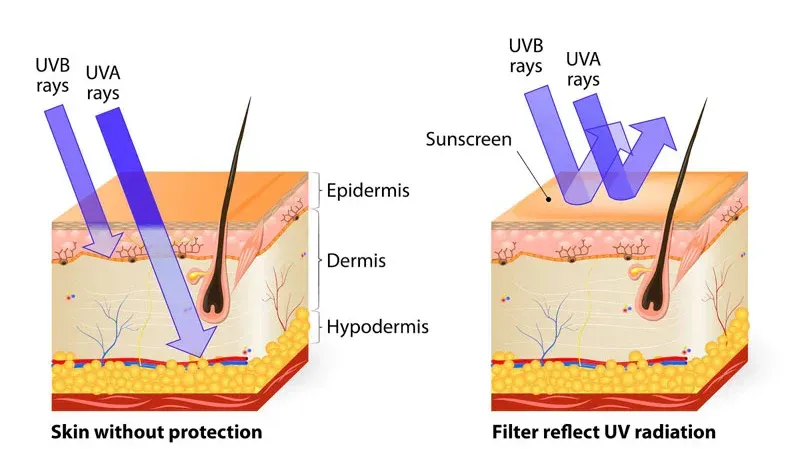
When you tan, your skin produces more melanin, its natural pigment,
in response to UV exposure. Add a fresh tan over your tattoo, and you've given the laser a second target to compete with the ink. That forces a choice: dial the settings down to protect the tanned skin, which fades the tattoo more slowly, or postpone the session entirely until the tan settles. Either way, a tan works directly against the result you're paying for.
There's a cost angle to this too. Slower, more cautious sessions can mean
more sessions overall, which is more time and more money. Protecting your skin from the sun is one of the simplest ways to keep your plan on track.
And then there's the skin itself. Treating sun-damaged or tanned skin increases the risk of pigment changes: patches that heal darker or lighter than the surrounding skin. Both are stubborn to reverse and can outlast the tattoo you came to remove. A light tan carries this risk, not just a full burn. When it comes to your treated area, a tan and a burn sit closer together than most people think.
Before and After: There Are Two Windows, Not One
Most guides only talk about sun after a session. That's half the picture.
Sun exposure
before your appointment matters just as much. If you show up with a fresh tan or, worse, a sunburn on the area, there's a real chance your technician will reschedule rather than treat compromised skin. That protects you, but it also means a wasted trip. So in the weeks leading up to a session, keep the area out of direct sun and skip the self-tanner, which fools the laser the same way a real tan does.
After the session, you're back in the 6-week window above, with the area kept covered or protected once you return to daylight. Treated skin is busy clearing shattered ink and rebuilding. Sun damage pulls its attention away from that work and toward repairing itself instead.
For the full rhythm of what to do between sessions, our
removal aftercare guidance walks through it start to finish.
The Canadian UV Rule Most Guides Miss
Here's something you won't find in most tattoo-removal articles, and it happens to be a point of Canadian pride.
The UV Index that pops up in your weather app was invented here. Scientists at
Environment and Climate Change Canada created it in 1992, and Canada was the first country in the world to issue daily UV forecasts. The tool worked so well that in 2002 the World Health Organization adopted the Canadian model as the global standard. So when you check the UV Index to plan around a session, you're using a Canadian invention that the rest of the world borrowed.
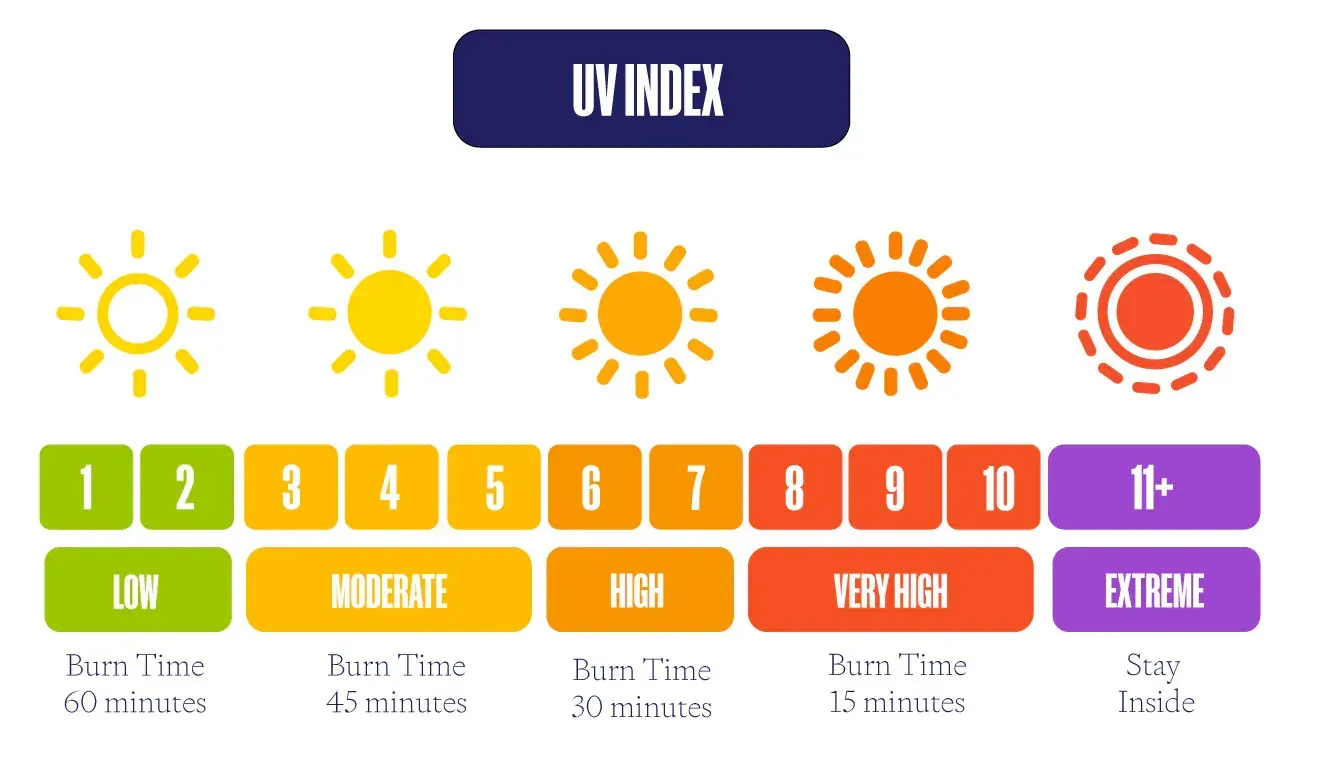
Now, the part that actually changes your behaviour. The guidance from Environment and Climate Change Canada is to protect your skin whenever the
UV Index hits 3 or higher, not 5, and not only on obviously scorching days. In Canada, the index regularly reaches 3 or higher from 11 a.m. to 3 p.m. between April and September, even when it's cloudy. For skin that's healing from a laser session, that's
the threshold worth respecting.
Checking it takes seconds. Your phone's weather app lists the day's UV Index, or you can pull your local forecast from the Government of Canada. If it's 3 or above and your treated area isn't covered, that's your cue to cover up or stay in.
On sunscreen, the Canadian guideline is straightforward: use one labelled broad-spectrum and water-resistant, with an SPF of at least 30. On skin that's freshly healing, many people go higher, to SPF 60, for extra margin. Reapply every couple of hours and after swimming or sweating. One caveat: don't put sunscreen on a raw, freshly treated area. Wait until the skin has closed and settled, and until then, let clothing do the protecting.
The Vancouver Factors That Quietly Amplify UV
Most removal guidance is written for ideal conditions: covered skin, low sun, predictable UV. A Vancouver summer is none of those things. A few local realities add extra UV to your treated skin without you noticing, catching people off guard. Here's what to actually watch for around the Greater Vancouver Area.
| Local Factor | Why It Adds Up | What It Means For You |
|---|---|---|
| Ocean and beach reflection (English Bay, Kitsilano, Spanish Banks, Jericho, White Rock) | UV bounces off water and pale sand on top of what hits you directly | A waterfront or beach day delivers more UV than the forecast number alone suggests |
| "City of glass" downtown (Yaletown, Coal Harbour) | Vancouver's glass towers reflect UV back down to street level | Even an urban lunch break isn't automatically low-risk for exposed skin |
| North Shore mountains and snow (Grouse, Cypress, Seymour, Whistler) | Altitude raises UV up to about 30% higher at 2,000 m, and fresh snow reflects over 80% of UV | A spring ski day or an alpine hike can nearly double your UV exposure. Winter is not a free pass |
| Midday summer sun (11 a.m. to 3 p.m., June to August) | This is when the index sits at its daily High | Even 15 minutes of unprotected exposure adds up on sensitized skin |
| Overcast Vancouver days | UV passes straight through cloud | A grey sky is not a shield. Protect at UV 3 or higher regardless |
| Seawall and patio season (Stanley Park, Granville Island, the Drive) | Hours of low-key ambient sun accumulate quietly | Cumulative exposure counts, even when you never feel like you're "sunbathing" |
One row deserves its own note: water. Beach and pool days pair sun with submersion, and treated skin has its own rules about getting wet. If a swim is on the agenda, read
what to know before swimming after removal first, because sand friction and waterborne bacteria pile their own risks on top of the UV. Shade helps in all of these cases, cutting your exposure by roughly half, but it's a buffer, not a wall.
What If You Slip Up?
You booked a session, then caught more sun than you meant to, or a tan crept in on a patio weekend. It happens, and it's not a lecture.
Just tell your technician before your appointment. It is always better to reschedule than to treat compromised skin and risk pigment changes, or to run a session at less than full strength anyway. A short delay costs you a little patience. Pushing ahead on sun-affected skin can cost you a result. No judgment, no pressure, just the honest call.
Your Best Move: Plan Around the Sun
None of this means you have to hibernate. It means being a little deliberate.
Cooler months make protection effortless, since long sleeves and covered skin are already the default. But you can absolutely run a removal plan year-round in Vancouver with a bit of discipline, and there are good reasons not to wait. If you're weighing when to begin, here's
why summer is actually a smart time to start, sun rules and all.
The through-line is simple. Treat the skin you're clearing as the valuable asset it is, because a cleaner canvas depends on healthy skin underneath. Protect it, and the process rewards you with steadier fading and fewer surprises.
Frequently Asked Questions
Can I get laser tattoo removal in Vancouver during the summer?
Yes. Summer doesn't rule out removal; it just asks for a bit more discipline around sun protection. Keep the treated area covered or protected before and after each session, avoid tanning the area, and you can work through the season without trouble. If you have a beach week or an alpine trip coming up, it's often easier to time a session around it than to protect through it.
What happens if I show up with a tan?
A tan shifts your baseline skin tone, and the laser reads your skin against your tattoo to work safely. A tanned area narrows that gap, which raises the risk of irritation and pigment changes, so your technician may adjust settings or reschedule. It's not a wasted trip so much as a protected one. When in doubt, tell us before you come in.
How long do I need to stay out of the sun after a session?
We recommend keeping the treated area out of direct sun for about 6 weeks. After that, keep it covered or protected with sunscreen whenever the UV Index is 3 or higher, and keep that habit going throughout your whole plan, not just the week after each visit.
Which sunscreen should I use on a treated area?
Once the skin has closed and settled, use a broad-spectrum, water-resistant sunscreen with an SPF of at least 30, and many people go up to 60 on healing skin. A mineral formula with zinc tends to be gentler on freshly healed skin than a chemical one. Reapply every couple of hours, and after swimming or sweating. Don't apply sunscreen to a raw, still-healing area; let clothing protect it until then.
Does a cloudy Vancouver day actually count?
It does. UV passes through clouds, so an overcast sky isn't the protection it feels like. The Canadian guidance is to protect your skin whenever the UV Index reaches 3 or higher, and in our summer that covers most of the middle of the day, regardless of how grey it looks.
Can I still hit the beach or the Seawall mid-plan?
Absolutely, with a little planning. Keep the treated area covered with clothing or a rash guard, reapply sunscreen to any exposed skin, and hold off on swimming for at least a week after a session. Aim to keep beach and water days a couple of weeks clear of your most recent treatment for the smoothest healing.
NIXX Laser Tattoo Removal is located in Vancouver, BC, and is connected to Adrenaline Studios.
Our technicians come from the tattoo industry and are laser-certified, so we understand both ink and skin. Laser tattoo removal is not recommended during pregnancy or while breastfeeding, and some medications may require a test spot first; we'll cover all of this during your consultation.
Ready to NIXX Your Ink?
If there's a tattoo you've been tolerating rather than owning, now is a great time to do something about it.
When you're ready to map out a plan built around your skin, your schedule, and your goals, we're here for you. Book your free consultation at NIXX, and we'll walk you through the whole thing, sun and all. No rush, no pressure.
Recent Posts