What Happens During a Laser Tattoo Removal Consultation?
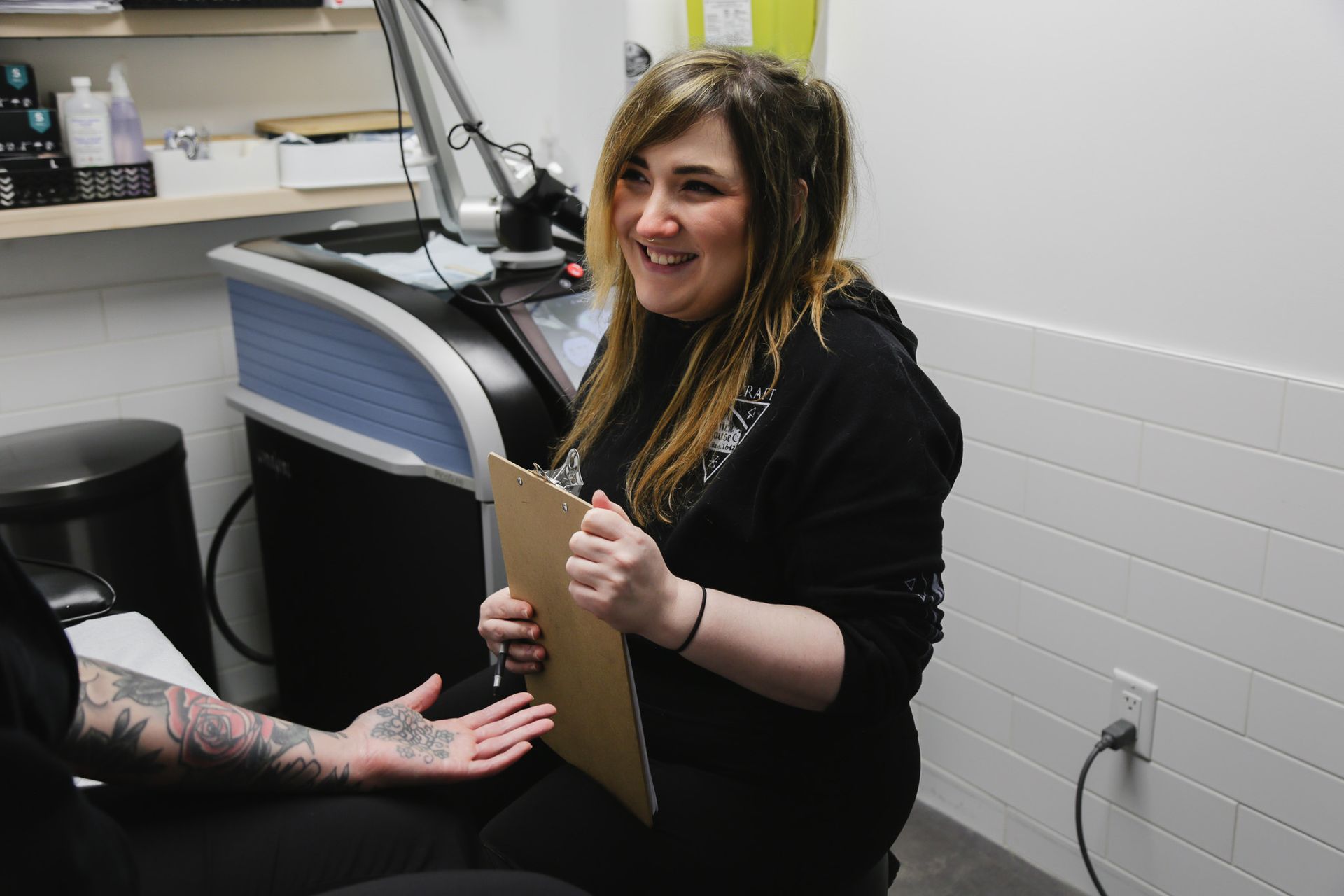
A tattoo can be deeply personal, even when it no longer feels right. You may want every trace gone, a single name or symbol lifted, or just enough fading to give a tattoo artist room for a stronger cover-up. A laser consultation turns that goal into a realistic, considered treatment plan based on your tattoo, your skin, and the outcome you have in mind.
At NIXX Tattoo Removal, the consultation isn't a sales pitch or a judgment about why you got the tattoo. It is a specialist assessment of how the ink is likely to respond, what the process may involve, and how we can approach removal with care.
What a Laser Tattoo Removal Consultation Is Designed to Answer
Laser tattoo removal isn't one-size-fits-all. Two tattoos that look similar from across the room can behave very differently under treatment. One may contain lightly applied black ink that clears steadily; another may have dense, layered pigment or colours that need a different wavelength and more patience.
A consultation replaces guesswork with a plan. We assess whether full removal, selective removal or cover-up fading best fits your objective, then discuss the practical path to get there. That includes likely treatment intervals, healing considerations, the factors that can affect progress, and what you can do between appointments to support your skin.
You should leave knowing what questions have clear answers, where outcomes remain variable, and why. No ethical provider can promise an exact number of sessions or guarantee complete clearance before seeing how your tattoo responds over time. A good consultation makes that uncertainty understandable, not vague.

Your Tattoo Is Assessed as More Than an Image
A detailed assessment begins with the tattoo itself. Placement, size, linework, shading, layering and ink density all matter. Professional tattoos often use more saturated ink placed deeper in the skin, while amateur tattoos can have uneven density and may fade differently across the design.
Colour is equally significant. Black and dark blue inks often respond well to laser treatment, but not all tattoos do. Green, teal, yellow, red and fluorescent shades can require a more tailored approach. Some pigments may change temporarily or, less commonly, darken when treated. Identifying these possibilities early is part of responsible planning.
We also consider whether the tattoo has been covered up, reworked or touched up. A cover-up often means multiple layers of ink in the same area. That does not make removal impossible, but it can change the pace and strategy. Raised texture, scarring, ink spread, and the tattoo's age are also useful clues.
Photographs can offer a starting point, but viewing the tattoo in person allows for a much more accurate conversation. Lighting, skin texture, and subtle colour variation are hard to judge on a screen.
Skin Tone, Skin History and Healing Response
Your skin deserves as much attention as the tattoo. During the consultation, we discuss your skin tone, sensitivity, healing history, and any tendency toward hyperpigmentation, hypopigmentation, or raised scarring. This helps us determine the safest treatment settings and whether a cautious test area makes sense.
Sun exposure matters. Recently tanned skin, including skin tanned on holiday or through artificial tanning, may need time before treatment. We will also ask about relevant medications, active skin conditions, pregnancy, previous laser treatments and anything else that could affect healing. These questions are not box-ticking. They help us adapt treatment to reduce avoidable risk.
Choosing Full Removal, Selective Removal or Fading
Your intended outcome shapes the entire treatment strategy. Full removal is the goal when you want the tattoo to fade to the faintest possible level your skin and ink allow. It often takes the longest because the goal is to reduce visible pigment as much as possible while respecting the skin's recovery cycle.
Selective removal may focus on a date, lettering, a small symbol or part of a larger design. This can be practical, but it requires precision. Treating around the ink you want to retain requires a careful hand and clear agreement on the boundaries.
Cover-up fading has a different finish line. The goal isn't necessarily to erase the tattoo completely. The goal is to reduce the density and contrast of the existing ink so your chosen tattoo artist has more freedom with the new design. In many cases, a few well-planned sessions can make a meaningful difference, though the amount of fading needed depends on the original tattoo and the proposed cover-up.
If you are preparing for a cover-up, bring reference images or a sketch if you have them. Better still, talk with your tattoo artist before you start treatment. Their preferences for placement, residual darkness, and design direction can help you set a more useful fading target. Tattoo removal and tattooing are different crafts, but the strongest cover-up preparation respects both.
Why Dual-Laser Capability Matters
Different tattoo pigments absorb different wavelengths of light. That is why a single laser platform isn't always the most flexible option for a varied tattoo. NIXX uses
PicoSure and
Hollywood Spectra laser platforms, so the treatment approach better matches the ink's colour, density, and characteristics.
This does not mean every tattoo needs both systems at every appointment. It means you can choose the right technology instead of forcing every tattoo through one protocol. Black linework, stubborn
blue-green pigment, and mixed-colour pieces may each require a different approach as treatment progresses.
A laser breaks pigment into smaller particles that the body gradually clears through its natural processes. Visible fading happens between appointments, not just during them. That is why sessions are spaced apart: your skin needs time to heal, and your body needs time to process the disrupted ink. Trying to compress that timeline doesn't improve the result.
The Practical Questions to Ask at Your Consultation
A consultation should feel like a two-way conversation. Ask how the provider will approach your particular colours and whether they foresee any pigment changes or skin-specific considerations. Ask about the expected healing window, aftercare, the minimum interval between sessions and what signs would require you to get in touch.
It is also reasonable to ask how you'll document progress. Consistent photographs taken in comparable lighting can be surprisingly valuable. Tattoo fading is gradual, and clients often notice only the remaining ink rather than how far they have already come. Progress tracking gives the plan a factual basis for adjustment.
You should also
discuss cost plainly. The price of an individual session is only one part of the decision. A useful consultation explains the likely treatment plan for your goal while honestly noting that skin response can only be confirmed over a series of sessions. The least expensive appointment isn't always the best value if it lacks specialized assessment, suitable technology, or continuity of care.
What Happens After the Consultation
If you decide to proceed, you may book your first treatment immediately, or schedule it for another day, as appropriate. You will receive guidance on
preparing the area and caring for it afterward. Typical short-term effects can include whitening at the treatment site, redness, swelling, tenderness and blistering. You can manage these with appropriate aftercare, gentle handling, and patience.
Between sessions, protect the area from
sun exposure and resist the urge to pick, scratch, or rush healing. Your treatment plan may evolve as the tattoo lightens. Ink that looks uniform at first can reveal different layers or colours, and your skin's response will guide later settings and timing.
For clients travelling from
Burnaby,
Richmond, Surrey or elsewhere in Greater Vancouver, this ongoing plan is particularly useful. Removal is a course of care, not a single errand. Booking with a specialist you can return to for consistent assessment makes it easier to make thoughtful adjustments along the way.
The right consultation should leave you feeling informed, respected and clear about your next step. Whether your goal is bare skin, a refined edit, or a fresh canvas for new work, the process starts with a close look at your tattoo and the one you want to move beyond.
Prefer to talk first? Call us at
(604) 734-8282 or browse our
Before & After gallery to see real results.
NIXX Laser Tattoo Removal is
located in Vancouver, BC, and is connected to
Adrenaline Studios. Our technicians come from the tattoo industry and are laser-certified, so they understand both ink and skin. Laser tattoo removal is not recommended during pregnancy or while breastfeeding, and some medications may require a test spot first; we'll cover all of this during your consultation.
Ready to NIXX Your Ink?
If you've been tolerating a tattoo rather than owning it, now is a great time to do something about it. Our Vancouver clinic is ready to help you take the first step. Whether you want full removal, a strategic fade for a cover-up, or honest answers about what's possible, we're here to help.
Your skin. Your choice. Your fresh start.
Recent Posts