PicoSure vs. Hollywood Spectra: Which Laser Is Right for Your Tattoo Removal?
This post is Part 3 of a three-part series on how NIXX uses dual-laser technology to serve a wider range of clients, tattoos, and goals. After dedicated deep dives into PicoSure and Hollywood Spectra, this guide compares the benefits of both lasers to help you understand which one — or which combination — is right for your ink and skin.
PicoSure vs. Hollywood Spectra. If you’re here, you’ve probably moved past “maybe, it's time...” People come to NIXX in Vancouver for laser tattoo removal for many reasons. A relationship ended. A design that made sense at 22 no longer does. A career shift put the tattoo in an inconvenient place. A tattoo artist mentioned that the area needs to be lighter before they can do the new piece justice. Sometimes there’s no big story; the tattoo just stopped feeling like them, and that’s enough.
Whatever it is, you don’t need a dramatic reason to want it gone. What you do need is accurate information. Not all lasers work the same way, and the difference is significant for your skin, your comfort, and how long this actually takes.
How Laser Tattoo Removal Works
The laser targets ink particles, not the surrounding tissue. Short pulses of light are absorbed by the ink, which breaks it into smaller fragments. After each session, your body clears those fragments through its immune and lymphatic systems.
That last part is what most clinics under-explain. The laser breaks the ink up. Your body removes it. How quickly that happens depends mostly on three things:
- Your health: circulation, lymphatic function, whether you smoke, and how well you heal.
- The age of the tattoo: older ink has already started breaking down; fresh ink sits denser.
- The type of tattoo: professional vs. amateur; ink density; layering; and colour.
Wavelength and pulse duration also matter: they affect how the laser interacts with ink in the first place. But two people with identical tattoos can have very different timelines, and that usually comes down to what their bodies do after the session, not what happened during it.
This is also why “a laser is a laser” is bad advice. The wrong device can lead to slower fading, increased discomfort, and a higher risk of visible pigment changes, especially on medium to deep skin tones.
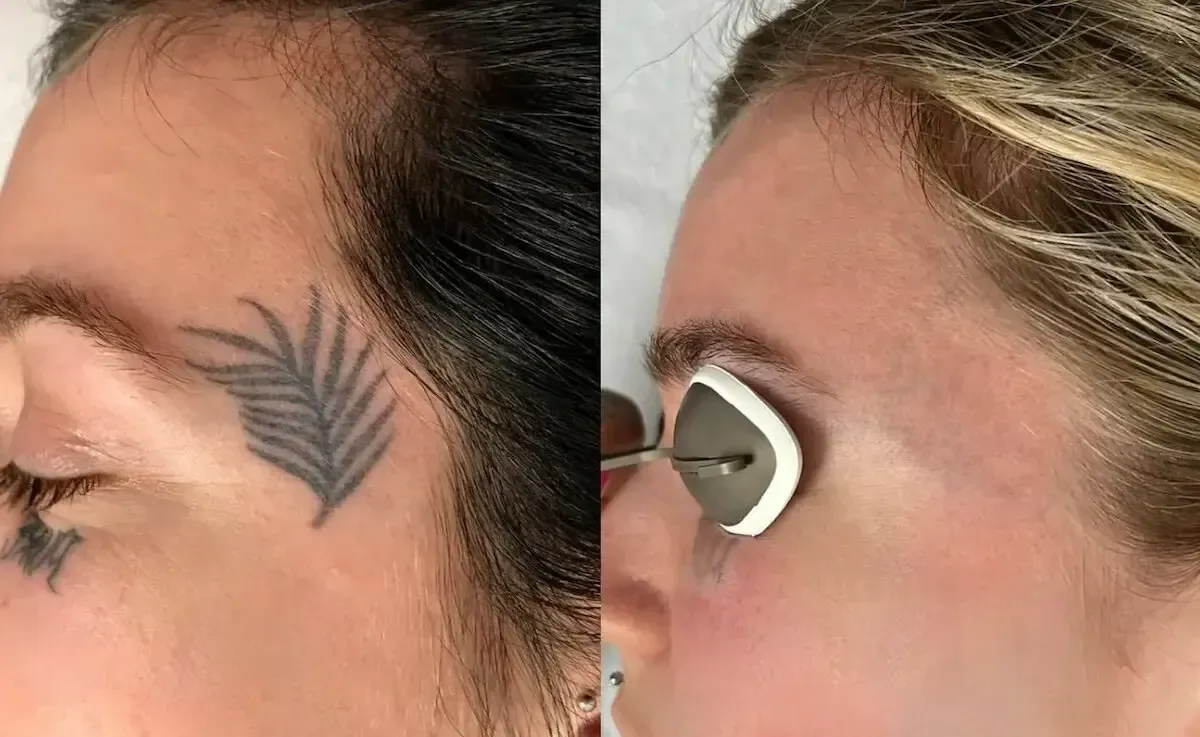
Face Tattoo Removal
After Four Treatments
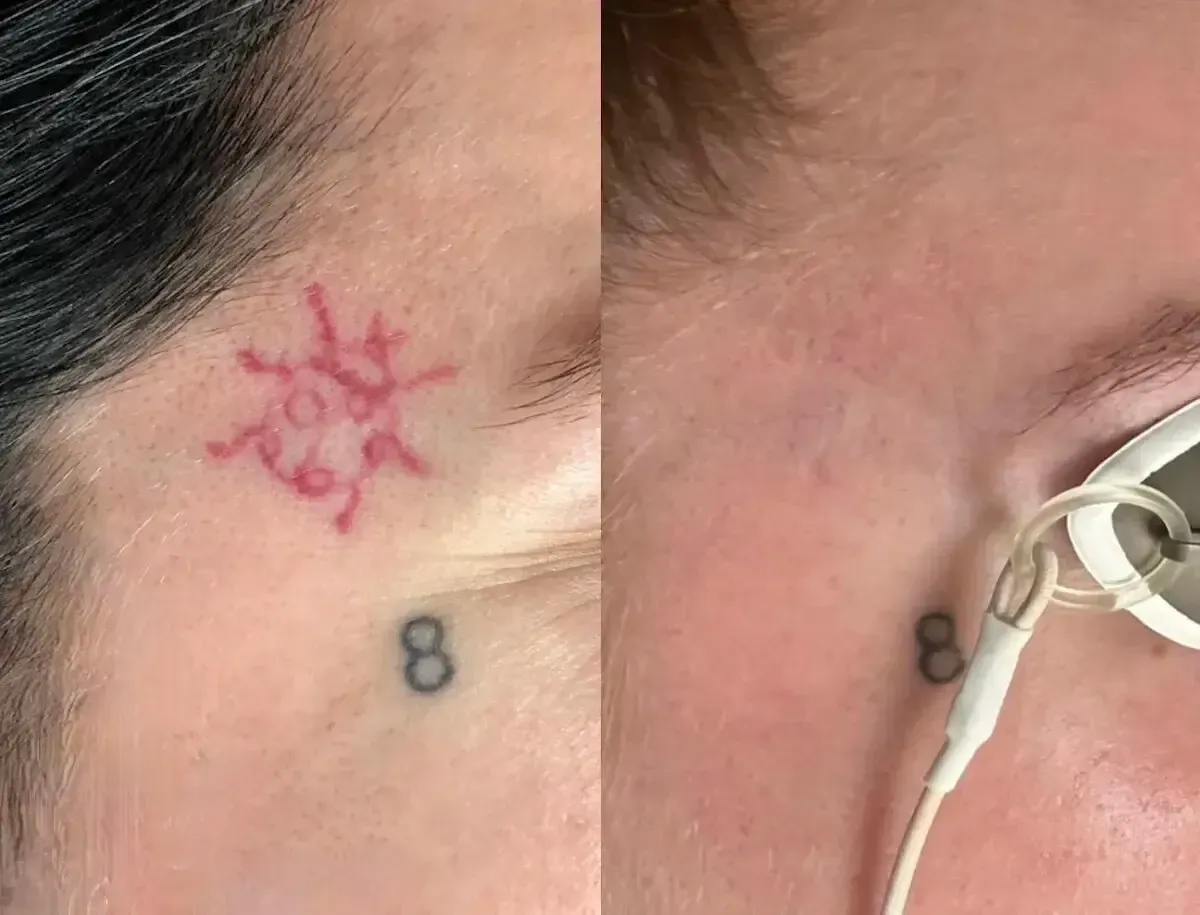
Face Tattoo Removal
Another NIXX Success
Three Wavelengths, One Reason: Your Ink Is Not All the Same
Different ink colours absorb different wavelengths of light. Some inks respond to one wavelength, but not another. That’s why a single-wavelength laser can remove black ink but struggle with green: it’s not about power, it’s about physics.
At NIXX, we use PicoSure’s two core wavelengths:
- 755 nm — the primary wavelength, effective on black, blue, and green inks that sit deep in the skin.
- 532 nm — suited to warmer pigments: certain reds, oranges, and yellows.
Together, these two wavelengths cover the majority of tattoo ink colours encountered in practice. For clients with deeper melanin-rich skin tones where 1064 nm becomes the safer choice, that wavelength is available through our Hollywood Spectra, which is part of why having both systems matters. Part 3 of this series covers how we decide which laser, or combination of lasers, fits your tattoo and skin tone.
In reality, the wavelength isn’t chosen just once for the whole tattoo. It’s picked for each section and colour, based on how your skin responds. This isn’t a sales tactic. It’s simply how science works, and why a proper in-person assessment changes what's possible.
The colour-specific claims here aren't just technical theory. Peer-reviewed research published in journals including the
Archives of Dermatology and Lasers in Surgery and Medicine has documented PicoSure's clearance of blue, green, and yellow inks: colours that older lasers often can’t remove. PicoSure has been the subject of over 26 published clinical studies, which is more documented validation than most laser systems in this space can claim.
What PicoSure Gives a Technician to Work With
The short pulse is the key feature, but what really matters is the control PicoSure gives during each session.
Variable spot sizes let the technician work precisely: tighter on small, detailed areas, wider on larger fields, without over-treating skin that's already been hit in a previous pass. Adjustable fluence settings mean the energy level can be pushed on dense, stubborn ink or dialled back where the skin needs more cautious handling. For ink that resists standard settings entirely, PicoSure includes a boost mode that further shortens the pulse width, applying more concentrated force to recalcitrant pigment without simply cranking up the heat. Wavelength flexibility means the right option for each pigment can be selected mid-session rather than locked in at the start.
All this technology only works if the person using it knows what they’re doing. A powerful laser in the wrong hands won’t give better results: it can actually cause more skin damage. The equipment sets the limit, but the technician decides what results you get.
“After many years of running a tattoo shop, I found that customers looking to remove or fade their tattoos were often sent to aesthetic studios that didn’t truly understand tattoos. They offered removal, but specialized in anti-aging and other laser procedures. I opened NIXX Tattoo Removal to give clients access to technicians with real tattoo-industry knowledge and experience, as well as the best available tattoo-removal laser technologies. Now, with a dual-laser approach, we can choose the right laser for each tattoo—based on the ink, depth, and skin type—rather than trying to remove every tattoo with the same technology. It’s about giving every tattoo the approach it needs to achieve the best results.”

David Nixon
Founder of NIXX Tattoo Removal in Vancouver, BC
PicoSure vs. Hollywood Spectra: What Each Does Best
PicoSure and
Hollywood Spectra both rank among the top tier of tattoo removal technologies. They just approach the job differently, which is where a proper consultation becomes important.
PicoSure: Wider Colour Range, Strong Photomechanical Effect
PicoSure fires ultra-short picosecond pulses. The photomechanical effect it produces is good at disrupting a wide range of ink colours, including greens, blues, and purples that older lasers struggle with. It tends to be the better choice when:
- A tattoo has mixed or multicoloured ink.
- You’re planning a cover-up and need broad, efficient fading across the piece.
- Dense, saturated ink needs meaningful disruption.
Hollywood Spectra: Built for Heavy Black Ink
Hollywood Spectra is a nano and PICO-capable Q-switched laser with multiple wavelengths. Where it stands out is
heavy, deep black ink: the kind of saturation that sits at depth and needs targeted power rather than range. It also provides fine control over energy delivery, which is important for melanin-rich skin or for areas where precision matters more than breadth.
PicoSure vs. Hollywood Spectra: A Closer Comparison
You’re not choosing between good and bad. You’re choosing between two strong tools that handle ink differently.
How Each Laser Hits the Ink
PicoSure delivers high-intensity pulses across a wide spectrum, making it useful for multicoloured work or for efficiently disrupting a range of pigments. Hollywood Spectra targets deep black ink particularly well and offers more granular energy control for situations where the skin needs cautious handling.
Short version: PicoSure for colour range, Spectra for heavy black and fine control.
Sessions and Timeline
Time per session is similar for both on the same-sized tattoo. Most people need 6 to 12 sessions for full removal; fewer if the goal is a cover-up fade rather than a clean slate. That’s a wide range, and the honest reason for it is that your body’s clearance rate is often the biggest variable. Health, tattoo age, and ink type tend to determine the timeline more than the choice of laser. Your consultation will give you a more specific estimate based on what we’re actually looking at.
Comfort
Both fall within the rubber-band snap range for most people. Placement matters more than the device. At NIXX, we use the Zimmer Cryo6 cooling unit, which runs continuously throughout the pass, not between passes, to manage sensation and protect the skin in real time.
Two Lasers. One Goal: Your Best Result.
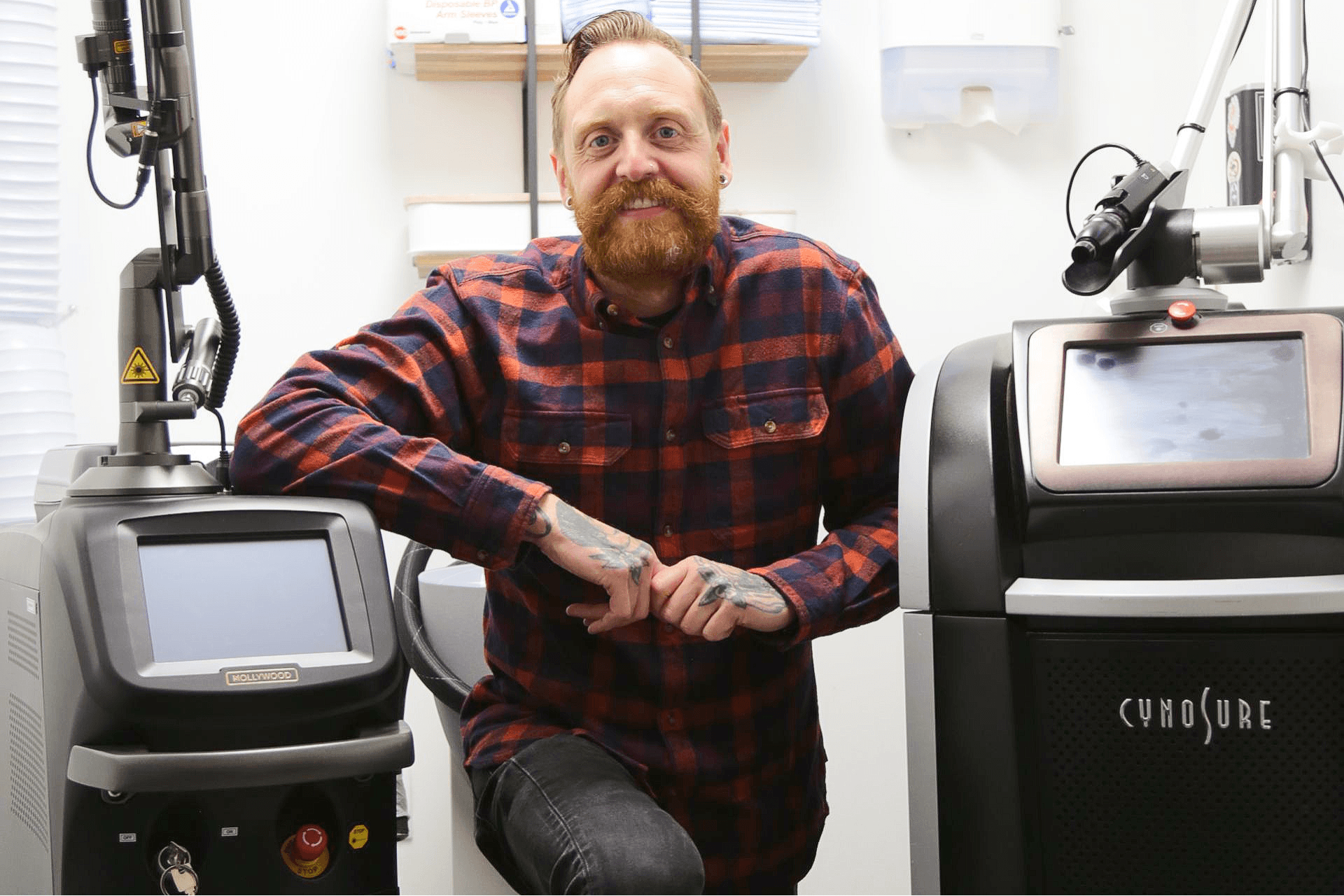
Most clinics in Vancouver work with a single laser. NIXX uses both PicoSure and Hollywood Spectra, choosing the right tool for your tattoo rather than fitting every tattoo to one tool.
● Precision Technology
PicoSure
PicoSure fires in picoseconds — trillionths of a second — shattering ink into particles small enough for your body to clear faster. It excels on stubborn colours like blue and green, and delivers results with less thermal damage to surrounding skin. Fewer sessions. Cleaner clearance.
● Versatile Power
Hollywoood Spectra
Hollywood Spectra is a multi-wavelength Q-switched Nd:YAG laser that is highly effective on black, red, and darker ink tones across a range of skin types. Its versatility makes it the right choice when precision targeting across multiple wavelengths will produce the best outcome for your tattoo.
Consultation and Treatment Planning at NIXX
Before any laser decision gets made, we start with a proper assessment. What you’re trying to do, your skin history, and what the tattoo actually is all shape the approach. The laser should fit your skin and tattoo, not the other way around.
What We Assess:
- Your goal: full removal, fade for a cover-up, or targeting part of a larger piece
- Tattoo specifics: age, layering, amateur or professional, any prior laser work
- Ink behaviour: colour families, density, blowouts, scarring
- Placement and lifestyle: friction zones, sun habits, work dress code, training routine
- Skin tone and history: Fitzpatrick type, past pigment issues, keloids, sensitivities
- Health context: circulation, medications, healing patterns, schedule
For complex placements, such as the neck,
ribs, and
intimate areas, we also draw on our placement-specific resources, including guides on tattoo removal for these areas.
How We Choose Between PicoSure and Spectra
Once we know what we’re working with, we choose the tool that fits, not the one that’s most convenient. We weigh the ink colour mix, skin tone, pigment risk, your end goal, and what your body can realistically handle per session.
Sometimes that means PicoSure for a multicolour piece, Spectra for the deep black work in the same tattoo, then reassessing as it lightens. Your plan reflects your tattoo, not a menu of standard packages.
A Note on Cost
The
cost of tattoo removal is a real consideration, and one we’re straightforward about. What you’ll pay depends on tattoo size, ink complexity, and the number of sessions your plan requires; that’s why a price quote without a proper assessment isn’t worth much. Your free consultation at NIXX gives you a real estimate based on what we’re actually looking at. Some clients also find that package pricing makes longer treatment plans more manageable. We’ll walk you through the options when we meet.
What to Expect: Before, During, and After Your Session
You should know exactly what you are signing up for before the first laser pulse hits your skin. Here is how a typical PicoSure or Hollywood Spectra session at NIXX actually feels, start to finish.
Before Your Session
Your preparation is simple and straightforward:
- No direct sun on the tattoo area for a minimum of six weeks before treatment. No tan, no self-tanner. Sun-exposed skin responds differently to laser and increases the risk of pigment complications; it’s not a guideline we negotiate on.
- Avoid harsh exfoliants or active skincare on the area in the days leading up to your session, and follow any specific guidance from your consultation.
- You’re welcome to apply your own numbing cream before coming in. We don’t apply it at the clinic; it needs 1 to 1.5 hours to absorb properly and be effective, so it has to go on at home before you leave.
When you arrive, we clean and photograph the tattoo, confirm your goals for that session, and answer any last questions before we begin.
During Your Session
Once your skin is ready:
- Eye protection on, positioned so you can stay relaxed and still.
- A brief test spot to confirm settings.
- A single controlled pass over the tattoo, with the Zimmer Cryo6 running continuously throughout.
Sessions are short. The sensation is intense but brief. For placement-specific details on what to expect, our
removal insights guides are worth reading before your first session.
AfterYour Session: Skin Care
The area often looks frosted or white right after, with surrounding redness and swelling, a mild sunburn response. We cool the skin, apply a soothing product, and cover it if needed. You’ll leave with written aftercare matched to your skin and lifestyle.
Leave your bandage on until the morning after. Your skin needs that overnight window to stay protected while it begins responding to the treatment. Blisters may form during this time, and that’s normal.
Starting the day after, wash the tattoo twice a day with warm water and mild soap, using only gentle hand wash. No loofahs, sponges, or exfoliants. Rinse it, then pat dry with a fresh piece of paper towel. Don’t wipe or rub; that kind of friction can irritate or break skin that’s still in early recovery. Once dry, apply a thin layer of healing ointment with clean hands.
We recommend Aquaphor, but any healing ointment works. Re-bandaging is optional. If you’re going to be physically active, whether at the gym or a physical job, apply a protective barrier over the area. If you’re resting at home, let the skin breathe.
AfterYour Session: Understanding Blisters
Blistering is a normal response to laser tattoo removal, not a sign that something went wrong. What you’re seeing is essentially a micro-expulsion of gas produced by the laser’s impact on ink particles: a small explosion under the skin.
Blisters aren’t a warning sign. They are evidence that the laser made contact.
The blisters can look alarming, but they’re actually a reasonable indicator of how much impact the laser made on the ink. Let the skin inflate and deflate on its own. Once deflated, the blistered skin will dry and flake. Don’t pick, pop, or scratch. If the blistering looks excessive to you, come back in, and we’ll lance them properly.
AfterYour Session:
Speeding Up Ink Clearance
There are really only two things you can actively do between sessions to speed up how quickly ink clears:
drink more water
and
move your body. Hydration improves lymphatic flush. Movement promotes circulation. Both help your immune system process the broken ink particles more efficiently. Keep any exercise gentle and sanitary while the skin is still healing.
Timelines and the Long-Game Rules
Fading builds gradually as your lymphatic system clears fragmented ink. Allow a minimum of three months between sessions; your skin needs to fully heal, and your body needs time to clear ink before the next treatment makes sense.
For the entire length of your removal, from first session to last, no unprotected sun exposure on the area being treated. This isn’t just a pre-treatment rule. Sun exposure to treated skin throughout the process increases the risk of irreversible pigment changes. Sunscreen on that area consistently for as long as removal continues.
Any deviation from these aftercare steps significantly increases the risk of scarring and skin discolouration. The laser does its part in the session. What happens in the days after is largely up to you.
Making the Call: Is This the Right Time to Start?
A few questions worth being honest with yourself about before committing to a plan:
- What’s the actual goal: full removal, a fading pass for a cover-up, or targeting one section of a larger piece?
- How visible is this in your daily life, and how much downtime can you realistically manage?
- What’s your skin history: do you pigment easily, scar, or have known sensitivities? If you’re unsure, your GP can give you a clearer picture before your consultation.
- Are you a good healer? Circulation issues, smoking, or a demanding physical schedule can all affect your timeline; it’s worth knowing that going in.
- How firm is your timeline? If you have a target date: a wedding, a job interview, a new tattoo appointment, bring that to the consultation. It shapes how we pace your sessions.
Specifically for cover-up planning, our article on tattoo lightening for cover-up goes deeper into strategy and what “light enough” actually means in practice.
In general terms, PicoSure for colour range and mixed ink; Spectra for heavy black and precision control. Many people end up with both over the course of treatment, adjusted as the tattoo responds.
No amount of research replaces what a trained technician can tell you from looking at your specific tattoo in person. That’s what the free consultation is for. Bring
your questions and your end goal. We’ll examine the tattoo, give you a straight read on what we see, and lay out a clear plan, including a realistic session estimate and cost breakdown.
Ready to Clean Your Canvas?
You’ve done the research. PicoSure and Hollywood Spectra are different tools. Neither is universally better. The right choice depends on what’s actually in your skin and what your body can clear. At NIXX, that’s the starting point: your specific tattoo, your skin, and an honest plan for getting from where you are to where you want to be. If you’d like to go deeper before booking,
explore our blog or check our
FAQ section for answers to common questions. When you’re ready for a straight answer about your tattoo specifically, the FREE consultation is there.
Recent Posts