Cover-Up Tattoo Ideas That Work Best After Laser Fading
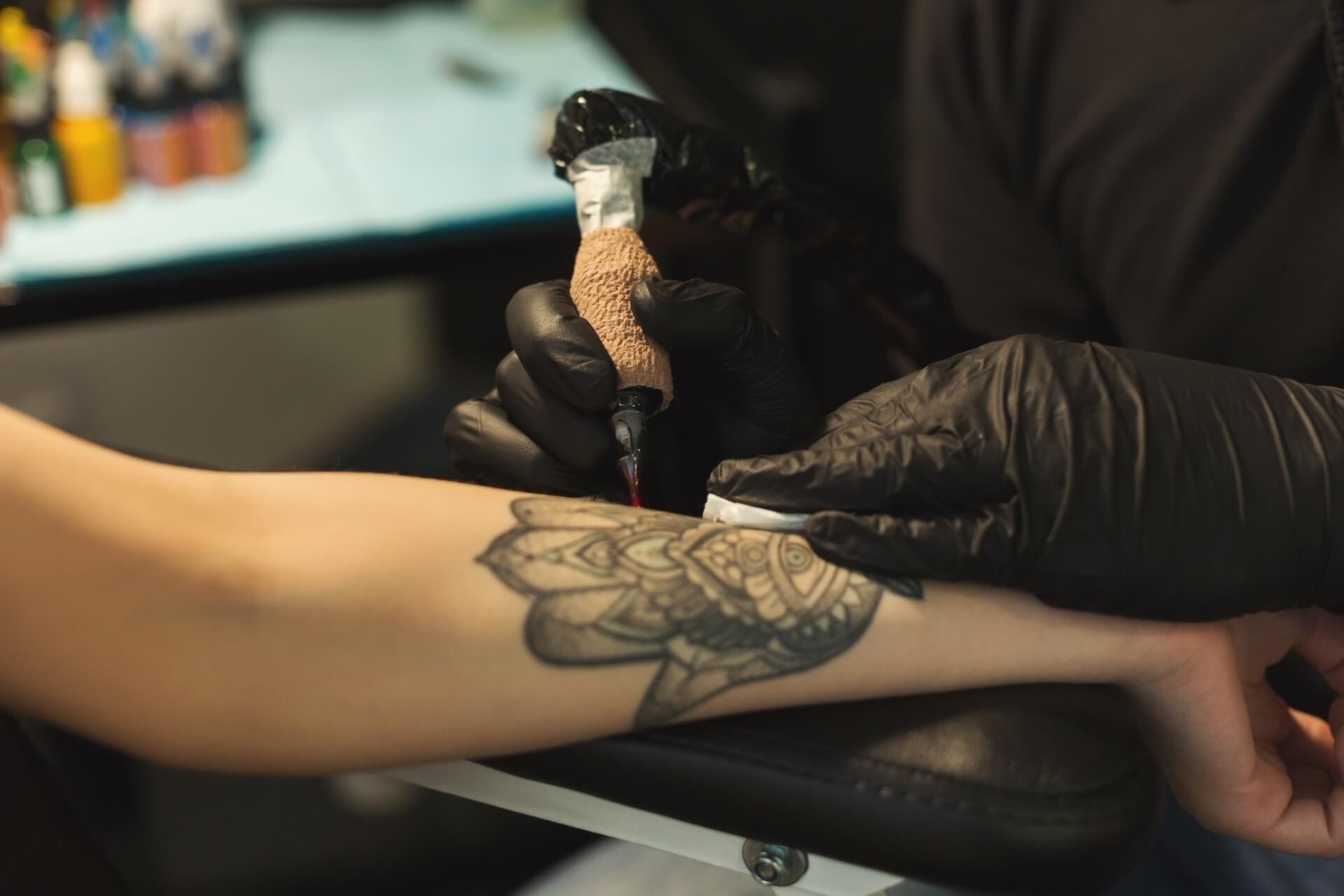
Picture a small black-ink script piece or tribal band on your forearm, a few years old and still solid black. You want it gone, but you worry that any cover-up will just be a bigger, muddier version of the same thing.
That worry has a basis. Dense black pigment can show through or muddy lighter, less saturated colours, so the new design has to go larger and darker to compete. Laser fading changes the starting point. Lightening the old ink gives the artist a more workable base without removing everything
Every idea below says how much fading it typically needs first. After the list, you'll find the sizing rule, the limits of what you can cover, and realistic sessions and costs in Canada.
A Three-Level Scale for How Much Fading a Cover-up Needs
Each idea below carries one of three labels: little fading, moderate fading, or heavy fading (or not recommended). Fading here means reducing the density and contrast of the old ink, not necessarily erasing it, so the artist has more design freedom.
Darker, more saturated ink needs more fading because it shows through whatever goes over it. Professional tattoos are usually packed deeper, while amateur ones have uneven density and fade differently. Designs with bold outlines and heavy shading can hide more of that ink, so they sit at little to moderate. Fine linework, pale colours, small details, and open negative space
generally fade more
because residual dark ink shows through delicate lines and light areas. A light, detailed design over dense black may require heavy fading or may not be recommended.
One thing that often surprises people:
fading for a cover-up typically takes a fraction of the sessions that full removal requires. Three or four sessions can soften a piece enough for a skilled artist to work over it, whereas clearing the same tattoo completely might take twelve. That difference matters when you're planning a budget and a timeline.
No single fading percentage applies to every tattoo. The target depends on the old piece's darkness, density, age and placement, plus the new design. Your tattoo artist makes the final call, and the fade-to-cover approach covers how that planning works.
Size matters too. A rough one-third guideline helps decide how much bigger the new tattoo should be than the old one, and a later section explains it.
Seven Subjects That Hide Old Ink, and How Much Fading Each Needs
Peonies and layered florals
Organic designs have a structural advantage here that geometric work doesn't. Because a floral composition has no rigid symmetry to preserve, the artist can bend leaves, extend petals, and redirect the design wherever the remaining ink needs to be hidden. The cover-up doesn't have to centre over the old tattoo — it can absorb it into the margins while drawing the eye to the prettiest part of the piece. Dark flower centres sit over the old lines, and petals extend past the original edges. Shaded florals
conceal old lines well, while pale fine-line flowers fail over dense black.
Fading needed:
little to moderate. Over the running example, a script piece on the forearm, one peony with leaves usually works.
Texture-heavy animals: wolves, bears, ravens, and more
Dense fur, dark feathers, and scales are among the most effective cover-up vehicles in tattooing, for the same reason florals work: texture creates visual complexity that absorbs underlying ink. A wolf or bear with thick, layered fur can sit over significant black without revealing the original piece. Ravens work particularly well — dark feathers carry enough value to mask what's beneath, and the form is flexible enough to extend naturally past old edges. Fading needed: little to moderate for dark, textured designs.
Snakes, dragons, and koi
Scaled bodies follow the forearm naturally, and curved lines integrate with most placement shapes. Dense shadow in the scales fills gaps that would otherwise let old ink show through. Fine-line versions of any of these are a poor choice over saturated ink — the texture needs weight to do its job. Fading needed: little to moderate.
Panthers
Controlled shadow and a curved, elongated body break up old lines well. Fading needed: little to moderate.
Birds
A dark bird with a shaded body, wings or foliage hides a lot of ink. Minimalist or lightly coloured birds hide much less. Fading needed: moderate for light designs, little for dark ones.
Skulls and gothic imagery
Dark eye sockets, heavy outlines and deep shadow absorb old ink. A large, solid or heavily lined old piece may need significant fading first.
Geometric and pattern work
Dense blackwork, mandalas and shaded fills can cover well. Thin lines, open space, and precise symmetry can expose the old tattoo or make it look misaligned when ink shows through. Patterns help when dense and hurt when airy. Fading needed: moderate to heavy for crisp, open patterns.
Dark, shaded designs mask old ink because heavy pigment sits over the darkest parts of the old tattoo. That stops working when the new design needs light areas or fine detail, which is where fading opens the options.
Small, Delicate Designs and the Fading They Need First
Small, fine-line designs need the most fading in this post because thin strokes and exposed skin can make
dense or dark ink visible. The style is open to anyone. These ideas share one requirement: the old script has to be much lighter first.
Fine-line florals and botanical sprigs
Fading needed: moderate to heavy. Light stems and petals have nothing to hide black lines behind.
Butterflies
Fading needed:
moderate to heavy for pale wings. A butterfly adds area, but fine-line wings
may not hide strong black pigment without darker outlines.
Moons and celestial pieces
Fading needed:
moderate to heavy. Minimal designs let
old outlines or lettering show through.
Delicate script reworks and small bird or wildflower clusters
Fading needed:
heavy for the script, moderate for clusters, which can spread across the old lines.
For fading, 3 to 5 sessions can
reduce saturation by 50 to 70% on tattoos that aren't already light. Estimates are approximate, and small designs over a dark piece still may not work.
Placement adds limits. Inner wrists are thin-skinned and small, so partial fading is often recommended. Ankle skin is
prone to blowout. Fingers fade quickly and blow out easily, and fading may soften a blowout halo without erasing it.
Collarbone has room but little cover for dark ink.
How Placement Changes What You Can Cover
On the
forearm, the running example (a dark black script) has limited room. The shaded peony from the idea list works there only if the old script is faded enough that the flower doesn't need to grow past the wrist and elbow.
The upper arm gives more space. A larger piece can extend beyond the original and
add darker shading, background, and texture, so a skull or koi design can hide more ink with less fading. A half sleeve goes further. Running the forearm piece from elbow to wrist lets the artist
manage stubborn pigment with layered shading and supporting elements, balanced with negative space and texture. The trade-off is a bigger design than you may want.
Fingers are the tightest case. A new design usually needs to be
slightly larger than the original, and fingers have no spare surface. Dense black lettering or broad bands are hard to disguise. Fading is often the realistic first step for dark, crowded tattoos near the joints, and it tends to be
less predictable on hands and fingers than on the upper arm. Once lighter, a small floral or bold symbol may fit.
Blackwork and Blackout When the Ink Is Too Dark or Too Old
Dense blackwork and full blackout cover old ink by absorbing it.
Solid fills, bold patterns, and abstract shapes suit dark, saturated, or aged tattoos, and blackout offers the most complete coverage. In the running example, a black script needs little or no fading first, and extra sessions may
add time and cost without changing the plan.
The trade-off is flexibility. Blackout is
hard to reverse or rework, so it suits you only if you're sure you want a dark result. If you might want colour or fine lines later, fading first keeps those options open. For blown-out lines, see our post on blown-out tattoos.
How Much Bigger a Cover-up Needs to Be
The one-third rule says a cover-up should be about 30 to 33% larger than the old tattoo, so the artist has room to hide its edges. Artists phrase it differently. Some talk about
30 to 50% larger, and some studios plan for
two to three times the original size. It is a planning estimate, and the artist sets the final size after seeing the tattoo.
The new design has to extend past the old edges so
old lines don't show at the border. Fading lowers the contrast the new ink must hide, so the
smaller end of the range becomes realistic.
Here is the running example, a 3-inch script. These sizes are approximate.
| Starting Point | Typical cover-up size |
|---|---|
| Dark, unfaded | 6 to 9 inches (2 to 3 times) |
| Faded to light grey | About 4 inches (one third larger) |
"Many cover-ups need to be two to three times the size of the original — and that's mostly about hiding the old piece at the periphery, not necessarily in the centre. A floral cover-up might actually tuck the old script into the outer leaves rather than the centre of the flower, drawing the eye to the beautiful part of the new piece rather than the darker edges. That's why the sizing feels surprising at first: the artist isn't just covering the ink, they're controlling where your eye goes."

Craig Gilbert
Senior Technician, NIXX Tattoo Removal in Vancouver, BC
A 3-inch piece grown to 4 inches
extends about 0.5 inches on each side. A faded script can take a small floral or moon. Our
fade-to-cover service
is built around this trade.
When a Cover-up Won't Work, Even After Fading
Some tattoos are poor cover-up candidates, and fading does not always change that. Very large, heavily saturated pieces and broad dark fields are
among the hardest cases. Raised or indented scars are also tough, because a cover-up
cannot erase scar texture. Blowout is similar: you can disguise migrated ink, but you can't clean it up.
Space matters too. A cover-up needs room to grow past the old edges, which is hard near a wrist bone or on a finger. A light, pastel or fine-line design may also let dense dark ink show through.
In those cases, more fading or full removal is often the better path. Fading is not a blank canvas, and it usually takes several sessions. Our
Hollywood Spectra laser is one option for stubborn ink.
A consultation answers the feasibility question. We assess the tattoo, your skin, medical history, and goals, and sometimes use a small test patch.
What a Faded Cover-up Costs and How Long It Takes
For a dark forearm script like our running example, expect three to five laser sessions, spaced at least 12 weeks apart. That puts the fading stage at roughly nine to fifteen months. NIXX lists
sessions starting from $205, three-session packages from $720 and six-session packages from $1,320, with final pricing set at a consultation. Appointments with a senior specialist cost 10% more.
"Fading for a cover-up is a very different commitment than full removal. We can often soften a piece enough in three or four sessions to give an artist a solid base to work with. Full removal of the same tattoo might take twelve. Most cover-up candidates are done with the laser stage much sooner than they expect."
Craig Gilbert
Senior Technician, NIXX Tattoo Removal in Vancouver, BC
The cover-up comes after the skin has fully healed, typically three months after the last laser session. In the Greater Vancouver Area, a
medium cover-up runs about $500 to $1,200, and small ones about $250 to $500. The hourly rate varies by tattooist, depending on tenure and specialisation. Added up, the example lands near C$1,000 to C$2,500 for the laser stage and C$500 to $1,200 for the tattoo, over 9 to 18 months. Session counts and costs vary by ink colour, density, depth, and skin type, and we can't guarantee either before an assessment.
After each laser session, expect whitening, redness, swelling, tenderness and sometimes blisters. Leave crusts and blisters alone. See a doctor for spreading redness, pus, fever or worsening pain. Once the new tattoo is done, follow your artist's aftercare instructions.
Choosing Your Cover-up: A Four-Step Path
Start with the old tattoo. Measure it, note how dark and dense the ink is, and check where it sits. Then pick two or three ideas from the list that suit that footprint, and compare how much fading each needs against your budget and timeline.
Take those ideas to a consultation and stay open to changes in subject, scale and texture once the artist sees the ink. NIXX's fade-to-cover service lightens the old tattoo, and the team recommends waiting about three months after the final session before the new one. Consultations are free in Greater Vancouver.
Further reading:
Fade-to-Cover: A Smarter Approach or browse our
Before & After gallery to see real results.
NIXX Laser Tattoo Removal is
located in Vancouver, BC, and is connected to
Adrenaline Studios. Our technicians come from the tattoo industry and are laser-certified, so they understand both ink and skin. Laser tattoo removal is not recommended during pregnancy or while breastfeeding, and some medications may require a test spot first; we'll cover all of this during your consultation.
Ready to NIXX Your Ink?
If there's a tattoo you've been tolerating rather than owning, now is a great time to do something about it. Our Vancouver clinic is ready to help you take the first step. Whether you want full removal, a strategic fade for a cover-up, or just honest answers about what's possible, we're here for it.
Your skin. Your choice. Your fresh start.
Recent Posts