Does Laser Tattoo Removal Hurt? What to Expect

A tattoo can mark a particular era, relationship, idea or aesthetic. Choosing to remove it does not need an explanation, but it does deserve clear information. So, is tattoo removal painful? Most people do find laser treatment uncomfortable, but the feeling is brief, manageable, and very different from enduring a long tattoo appointment.
Let's be honest about the question you're really asking. You're not curious about pain in the abstract. You want to know whether you can sit through this, whether it's going to be worse than getting the tattoo in the first place, and whether the discomfort is the thing standing between you and the skin you want.
Pain is personal. Your tattoo’s placement, density, colours, size and your own sensitivity all influence the experience. A proper treatment plan accounts for those details rather than pretending every tattoo, or every client, will feel the same.
So here's a straight answer, no sugar-coating and no scare tactics.
Is Tattoo Removal Painful During a Laser Session?
Laser tattoo removal is often compared to the snap of an elastic band against the skin, followed by a quick burst of heat. For many clients, that is a useful comparison, although it cannot capture every sensation. The laser delivers extremely short pulses of light into the ink, so the discomfort comes in fast, repeated bursts rather than one continuous feeling.
A treatment pass is usually much shorter than the time it took to get the tattoo. A small tattoo may take only moments to treat; a larger piece takes longer, but the laser is still only active for a limited part of the appointment. The anticipation can be harder than the treatment itself, particularly at a first session when you do not yet know what to expect.
Most clients describe the sensation as intense but tolerable. The aim is not to dismiss discomfort. It is to make the process predictable, paced appropriately, and supported with suitable cooling and aftercare guidance.
Why Tattoo Removal Discomfort Varies
There is no universal pain score for laser removal because the treatment is responding to a tattoo that is unique to you. Several practical factors shape how it feels.
Placement Matters
Areas with thinner skin, more nerve endings or less natural padding can feel sharper. Fingers, feet, ankles, ribs, sternum, spine and areas close to joints are commonly more sensitive. A tattoo on the upper arm, outer thigh or calf may be easier for some people to tolerate, though individual anatomy still matters.
If you remember a particular area being difficult during the original tattoo, mention that at consultation. It is useful context, not a guarantee that removal will feel identical. Tattooing creates a wound by repeatedly depositing ink; laser removal targets existing ink beneath healed skin. They are different processes, even when they involve the same body part.
Ink Density and Tattoo Style Affect Treatment
A heavily saturated blackwork tattoo or a professional tattoo with multiple layers of ink may require a more involved treatment strategy than a light, faded design. Dense areas can mean more energy is needed to create an effective laser response, which may affect the intensity you notice during the session.
Colour also matters. Different pigments respond differently to different laser wavelengths. This is one reason a dual-laser approach can be valuable: the best setting is not simply the strongest setting. It is the setting selected for the ink, skin response and removal goal. At NIXX Tattoo Removal, our
PicoSure and
Hollywood Spectra platforms allow treatment planning around varied ink colours and tattoo characteristics rather than forcing every tattoo through a single approach.
Your Skin and Nervous System Are Part of the Picture
Sleep, stress, hormonal changes, illness and general sensitivity can all change how a treatment feels on a given day. Some clients find the first few pulses startling, then settle once they understand the rhythm. Others prefer breaks, particularly on sensitive placements. Neither response is unusual.
Skin type and how the skin reacts during treatment also influence the settings chosen. A responsible provider balances treatment effectiveness with skin safety. More aggressive is not automatically better, and chasing intensity at the expense of healing is rarely a sensible removal strategy.
What Happens Before, During and After Treatment
Knowing the sequence can make a laser appointment feel far less daunting. Before treatment, the area is assessed and prepared. Your practitioner will confirm the plan, review any relevant changes to your health or skin, and explain what is being treated that day. Protective eyewear is worn throughout the laser portion of the appointment.
During treatment, cooling is used to help protect the skin and reduce the heat sensation. You may see temporary whitening or frosting over the tattoo as the laser interacts with the pigment. This is a normal, immediate response and usually fades relatively quickly.
Afterwards, the area may feel hot, tender or similar to mild sunburn. Redness, swelling and sensitivity are common early responses. Depending on the tattoo and treatment, blistering or small scabs can also occur. These are reasons to follow your individual aftercare instructions carefully, rather than picking, rubbing or trying to speed the healing process.
The discomfort after a session is usually easier to manage than the brief laser pulses themselves, but it still deserves respect. Keep the area clean, avoid unnecessary friction and heat, and give the skin time to recover. If anything about your healing response concerns you, contact your treatment provider for advice.
How to Make Laser Tattoo Removal More Manageable
There is no prize for enduring a session without communicating. Let your practitioner know if you are anxious, need a pause, or have found a certain area especially sensitive in the past. A good appointment is collaborative: treatment can be paced around the tattoo and your response rather than rushed.
Arriving rested, well hydrated and having eaten normally can help you feel steadier. Avoid booking when you are unwell or when the treatment area is irritated, sun-exposed or compromised. It is also wise to wear clothing that gives easy access to the tattoo and will not rub tightly against freshly treated skin afterwards.
Ask in advance about the studio’s cooling methods and whether any pain-management options are suitable for you. Do not apply numbing products, take medication, or alter your routine without discussing it first. What is appropriate can depend on your medical history, the area being treated and the treatment plan.
It can also help to frame removal as a series of short appointments, not one overwhelming event.
Treatment sessions are spaced apart to allow your body and skin to do their part in clearing fragmented ink. That interval is not dead time. Healing well between appointments supports the overall result and helps protect the quality of your skin.
Full removal and cover-up fading can feel different
The desired endpoint affects the process. If you want
complete removal, the plan may continue until the remaining ink has cleared as far as your skin and tattoo will allow. If the goal is a cover-up, the objective may be selective fading: reducing darkness or clearing a specific section so a tattoo artist has more freedom to work.
Selective removal can be especially useful for clients who still like part of a tattoo but want to change a name, symbol, outline or background element. It requires precision and an understanding of what the future design needs. The question is not only, “How fast can this fade?” but also, “What level of fading will give the artist a clean, workable canvas?”
That distinction can make the process feel more purposeful. You are not simply removing ink. You are making an informed aesthetic decision, whether that means clear skin, a revised design or space for something that fits who you are now.
A Consultation Gives You the Clearest Answer
Photos and online pain comparisons can be useful starting points, but they cannot assess your exact tattoo. A consultation should look at placement, pigment, ink density, age, skin characteristics, previous cover-ups and whether you are seeking full removal or preparation for new work. It is also the right time to talk honestly about discomfort, treatment intervals, healing and realistic progress.
For clients in Vancouver and across Greater Vancouver, choosing a specialist studio means choosing someone who understands that tattoos are not generic cosmetic marks. They carry technical variables and personal history in equal measure.
You do not have to be fearless to begin removal. You only need a plan that respects your skin, your goals and the tattoo you are ready to leave behind.
NIXX Laser Tattoo Removal is located in Kitsilano, BC, and affiliated with Adrenaline Studios. Our technicians come from the tattoo industry and are laser-certified, so they understand both ink and skin. We don't recommend laser tattoo removal during pregnancy or while breastfeeding, and some medications may require a test spot first; we'll cover all of this during your consultation.
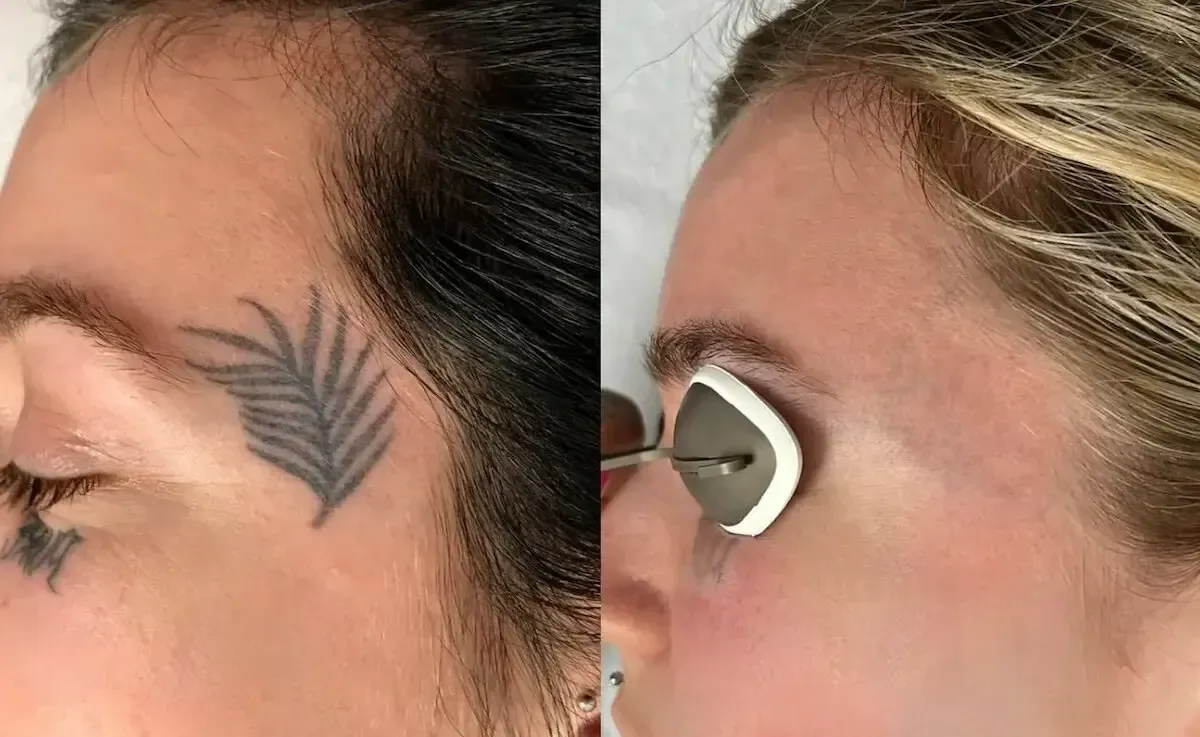
Face Tattoo Removal
After Four Treatments
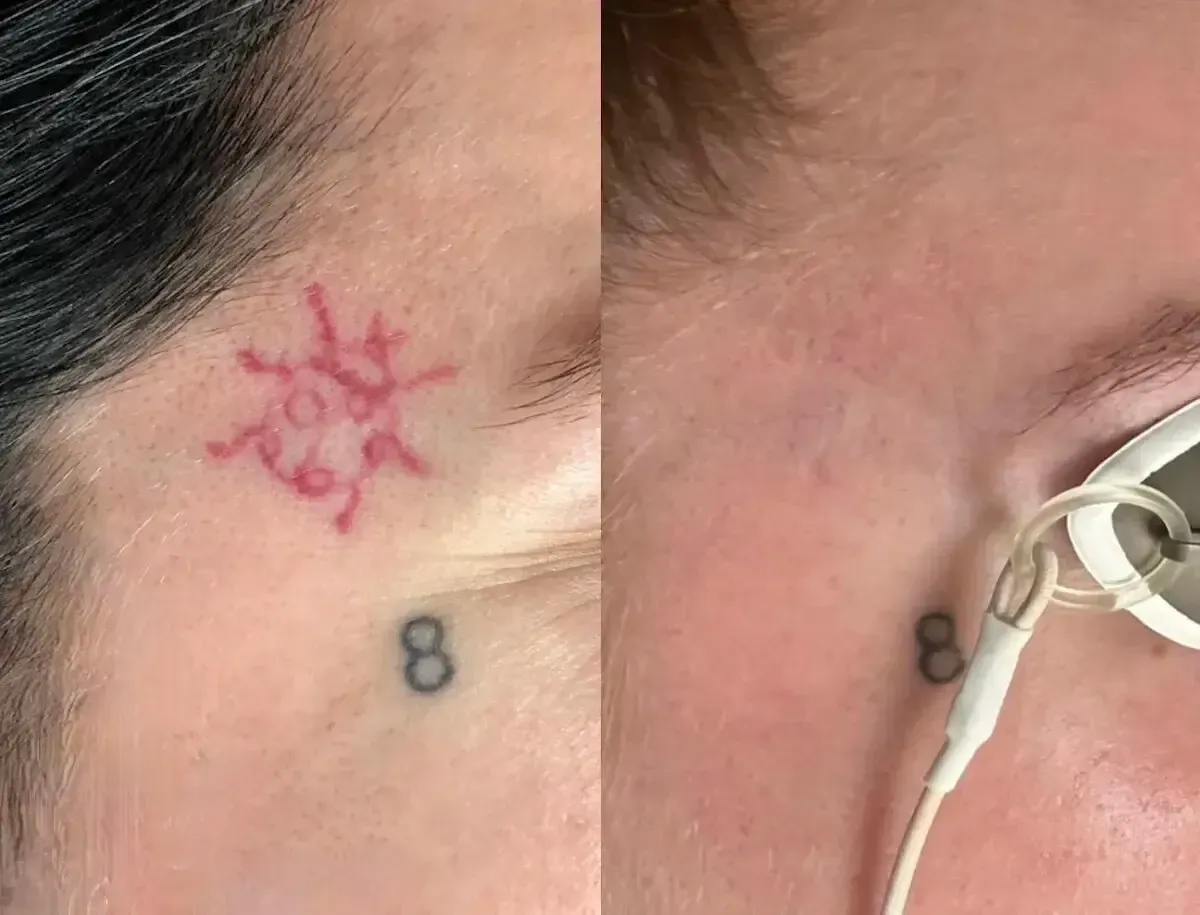
Face Tattoo Removal
Another NIXX Success
Three Wavelengths, One Reason: Your Ink Is Not All the Same
Different ink colours absorb different wavelengths of light. Some inks respond to one wavelength, but not another. That’s why a single-wavelength laser can remove black ink but struggle with green: it’s not about power, it’s about physics.
At NIXX, we use PicoSure’s two core wavelengths:
- 755 nm — the primary wavelength, effective on black, blue, and green inks that sit deep in the skin.
- 532 nm — suited to warmer pigments: certain reds, oranges, and yellows.
Together, these two wavelengths cover the majority of tattoo ink colours encountered in practice. For clients with deeper melanin-rich skin tones where 1064 nm becomes the safer choice, that wavelength is available through our Hollywood Spectra, which is part of why having both systems matters. Part 3 of this series covers how we decide which laser, or combination of lasers, fits your tattoo and skin tone.
In reality, the wavelength isn’t chosen just once for the whole tattoo. It’s picked for each section and colour, based on how your skin responds. This isn’t a sales tactic. It’s simply how science works, and why a proper in-person assessment changes what's possible.
The colour-specific claims here aren't just technical theory. Peer-reviewed research published in journals including the
Archives of Dermatology and Lasers in Surgery and Medicine has documented PicoSure's clearance of blue, green, and yellow inks: colours that older lasers often can’t remove. PicoSure has been the subject of over 26 published clinical studies, which is more documented validation than most laser systems in this space can claim.
What PicoSure Gives a Technician to Work With
The short pulse is the key feature, but what really matters is the control PicoSure gives during each session.
Variable spot sizes let the technician work precisely: tighter on small, detailed areas, wider on larger fields, without over-treating skin that's already been hit in a previous pass. Adjustable fluence settings mean the energy level can be pushed on dense, stubborn ink or dialled back where the skin needs more cautious handling. For ink that resists standard settings entirely, PicoSure includes a boost mode that further shortens the pulse width, applying more concentrated force to recalcitrant pigment without simply cranking up the heat. Wavelength flexibility means the right option for each pigment can be selected mid-session rather than locked in at the start.
All this technology only works if the person using it knows what they’re doing. A powerful laser in the wrong hands won’t give better results: it can actually cause more skin damage. The equipment sets the limit, but the technician decides what results you get.
Ready to NIXX Your Ink?
When you're ready to talk through your removal, we'll look at your current tattoo, listen to what you're dreaming up next, and map out exactly how much fading it'll take to get there. No pressure, and the consultation is free.
Your skin. Your choice. Your fresh start.
Recent Posts