How Many Sessions Does Laser Tattoo Removal Take?
This is the question we hear more than almost any other. People want to know what they're committing to before they start. How many visits? How many months? When will I actually see clear skin? It's a completely reasonable thing to ask, and you deserve a real answer rather than a brush-off. So here's the honest version, including why "it depends" is true and what it actually depends on.
Why There's No Single Magic Number
If a clinic promises you a fixed number of sessions before they've seen your tattoo, treat that the way you'd treat a mechanic who quotes the repair before opening the hood.
The truth is that removal is a process your own body completes. The laser breaks the ink into particles small enough to clear; your immune system carries them away over the weeks that follow. How quickly that happens and how many rounds it takes depend on a handful of factors that vary for every tattoo and every person.
So instead of a number we can't honestly give you yet, here's what shapes it.
What Actually Determines How Many Sessions You'll Need
Ink colour. Black is the most cooperative colour to remove. Blues, greens, and some bright warm tones are more stubborn and tend to need extra rounds. A simple black tattoo and a multicolour piece of the same size have different timelines.
Ink density and depth.
A heavy, saturated tattoo holds more pigment than fine-line work, so there's simply more to clear. Ink applied deep into the skin, or layered over an older tattoo, asks more of the process.
Size and location.
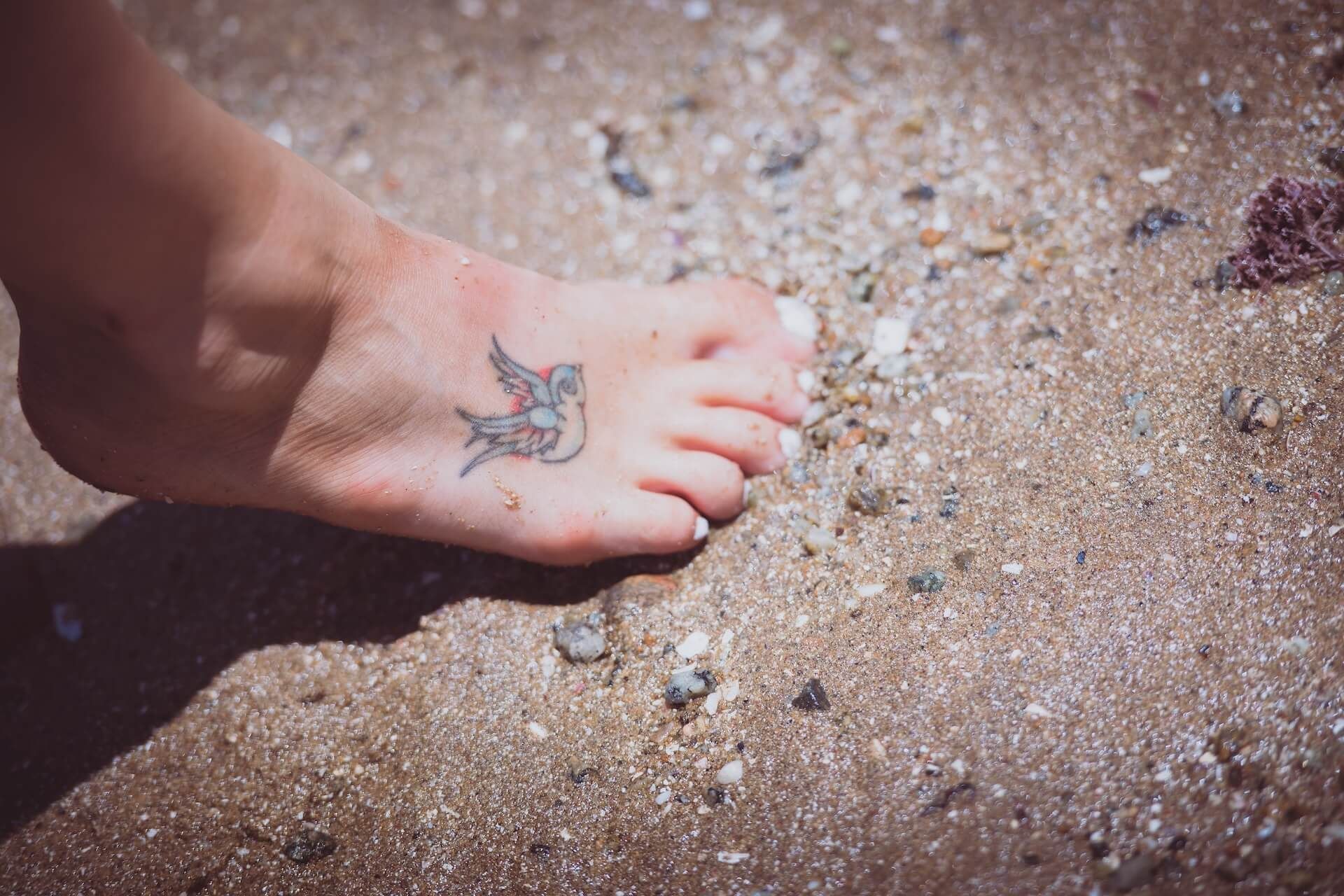
Larger pieces take longer. Placement matters too: tattoos closer to the heart, with stronger circulation, often clear a little faster than those out on the hands, feet, or lower legs, where the body's clearing system has further to travel.
Age of the tattoo.
Older ink often fades on its own, which can work in your favour. Fresh, deeply saturated ink usually needs more patience.
Your skin and circulation.
Skin type, general health, and how well you heal between visits all influence how your tattoo responds. Two people with near-identical tattoos can follow slightly different paths.
Whether it's been treated before.
A tattoo that's already been worked on elsewhere may behave differently, and we'll factor that in.
Your goal.
This is a big one. Full removal and fading for a cover-up are not the same job, which brings us to the next point.
Full Removal vs. Fading for a Cover-Up
These two goals have very different timelines, and it's worth being clear about which one you're after.
Full removal means clearing the ink as completely as possible. That's the longer road, since you're asking the skin to let go of every last particle.
Fading for a cover-up is usually fewer sessions because you're not erasing the tattoo; you're lightening it enough to give a new piece a clean foundation. If your plan is a cover-up rather than a blank slate, you'll likely need fewer visits than you'd assume, and we'll map that out with you. It's also where our connection to
Adrenaline Studios comes in, so the fade and the new tattoo are planned together rather than in isolation.
Knowing your goal up front changes the whole plan, which is precisely why we ask about it first.
Why the Timeline Matters as Much as the Number
Here's the part people don't always expect: it isn't just
how many sessions there are; it's
how far apart they are.
Your skin needs time to recover, and your body needs time to clear the shattered ink between treatments. Sessions are spaced roughly 8 to 12 weeks apart for that reason: not to stretch out your visits, but because rushing it doesn't work and isn't kind to your skin.
So a plan of, say, several sessions isn't going to be several appointments in a row. With 8 to 12 weeks between each one, it unfolds over many months. That's worth building into your expectations, especially if you have a date in mind, like a wedding, a new job, or a cover-up you're excited to start. The earlier you begin, the more comfortably the timeline fits your goal.
If you've got a deadline, tell us at the consultation. We'll be honest about what's realistic in the time you have.
How the Right Laser Changes the Math
The equipment used for the work directly affects how many sessions you'll need. Older nanosecond and Q-switch lasers, which some Vancouver clinics still use, heat the ink to break it up and often struggle with stubborn colours. That can mean more sessions to reach the same result.
NIXX uses a dual-laser approach:
PicoSure alongside
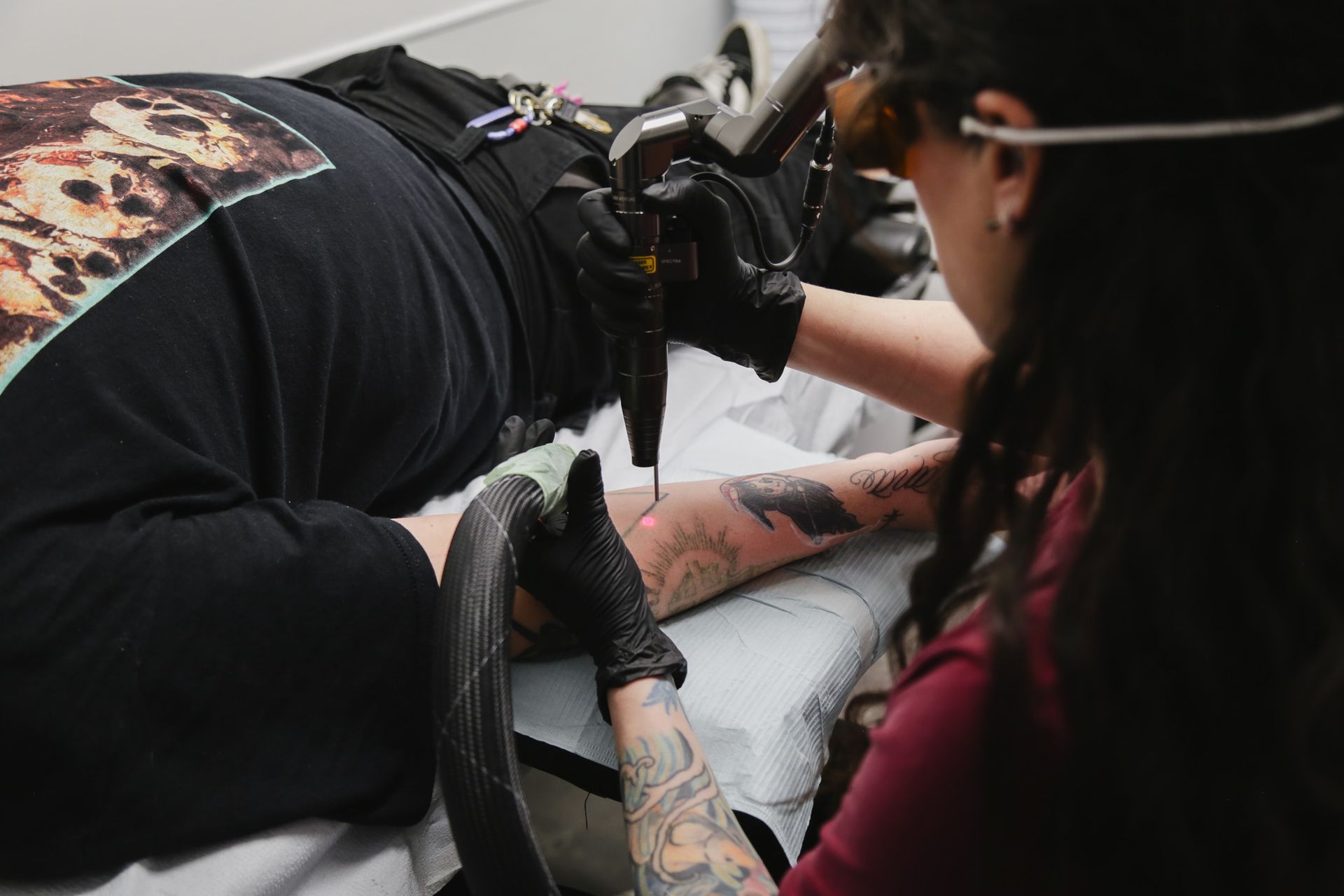
Hollywood Spectra. PicoSure uses an ultra-fast photomechanical pressure wave that shatters ink into finer particles your body clears more readily, and it works across the full range of colours and skin types. It typically needs fewer treatments than the older nanosecond lasers. Running two lasers lets us match the right tool to your specific ink, rather than treating every tattoo the same way, so we're not wasting a session chasing a colour that the wrong laser can't reach.
Fewer wasted rounds mean a shorter overall path for you. That's the whole point of the
dual-laser setup.
How We Actually Estimate Your Number
We can't predict the exact count in advance, and we won't pretend to. We can give you a realistic, experience-based estimate once we've reviewed your tattoo.
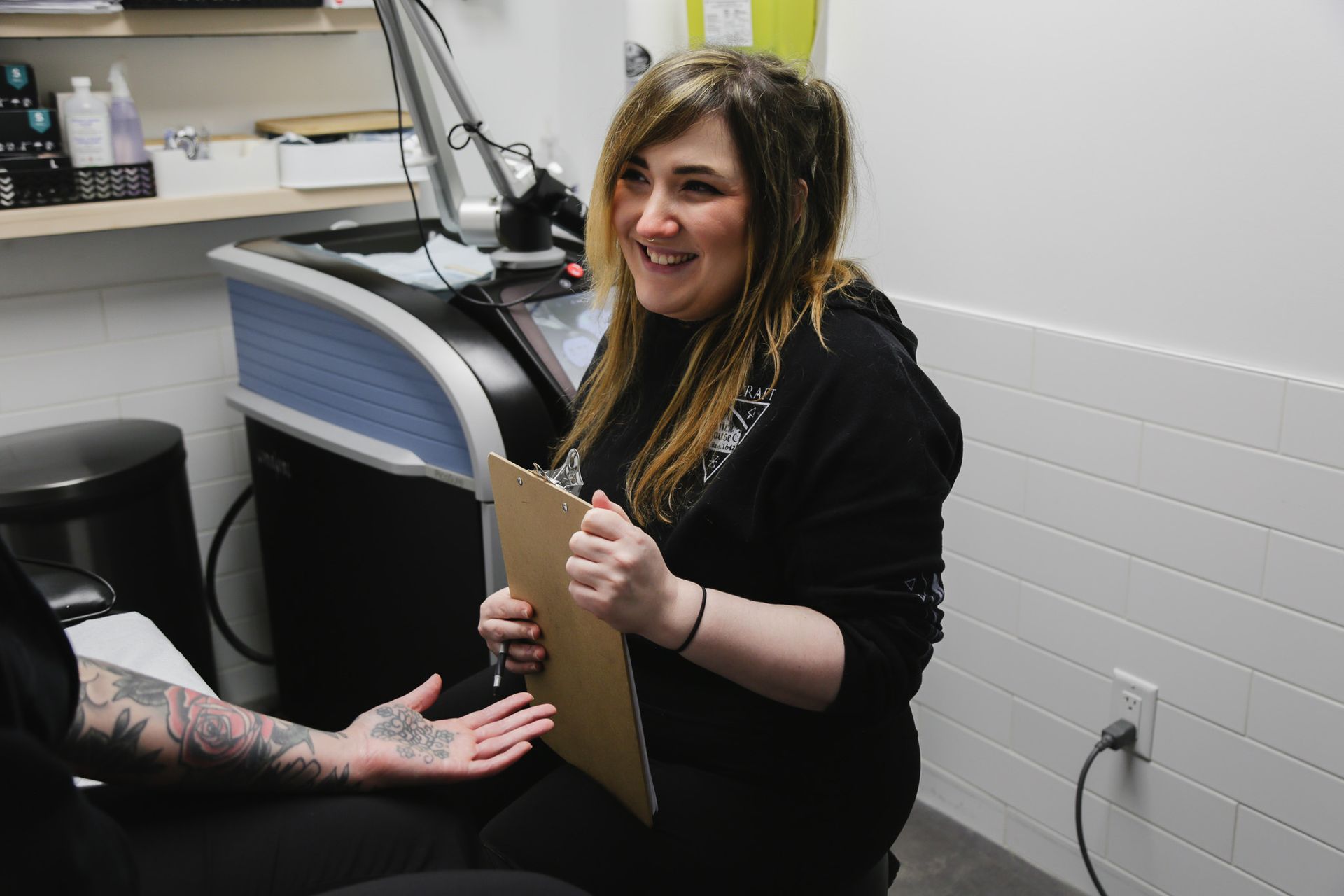
During your free consultation, one of
our technicians assesses your tattoo in detail, asks about your goals, and explains which laser is best suited to your ink and skin. From there, we build a personalized treatment plan with a realistic range of sessions and a clear timeline, so you know what you're walking into. You'll have room to ask anything still on your mind, and there's no pressure to book on the spot.
We also offer discounts on
multi-session packages, since most removals take more than one visit. If a package fits your plan, we'll talk it through with you rather than spring it on you.
The Honest Bottom Line
There's no universal number of sessions because there's no universal tattoo. Colour, depth, age, placement, your skin, and your goal all shape the count, and the timeline stretches over months because your body sets the pace, not us.
What we can promise is a clear, honest plan built around your actual tattoo, not a guess pulled from a brochure. When you're ready to find out what your specific tattoo would take, the next step is simple, and it doesn't cost a thing.
Book your free consultation at NIXX,
and we'll give you a realistic estimate, a personalized plan, and zero pressure. When you're ready, not before.
Still weighing things up? Our
FAQ page answers the questions we hear most often. NIXX Laser Tattoo Removal is located in Vancouver, BC, and is connected to Adrenaline Studios. Our technicians come from the tattoo industry and are laser-certified, so they understand both ink and skin. Laser tattoo removal is not recommended during pregnancy or while breastfeeding, and some medications may require a test spot first; we'll cover all of this during your consultation.
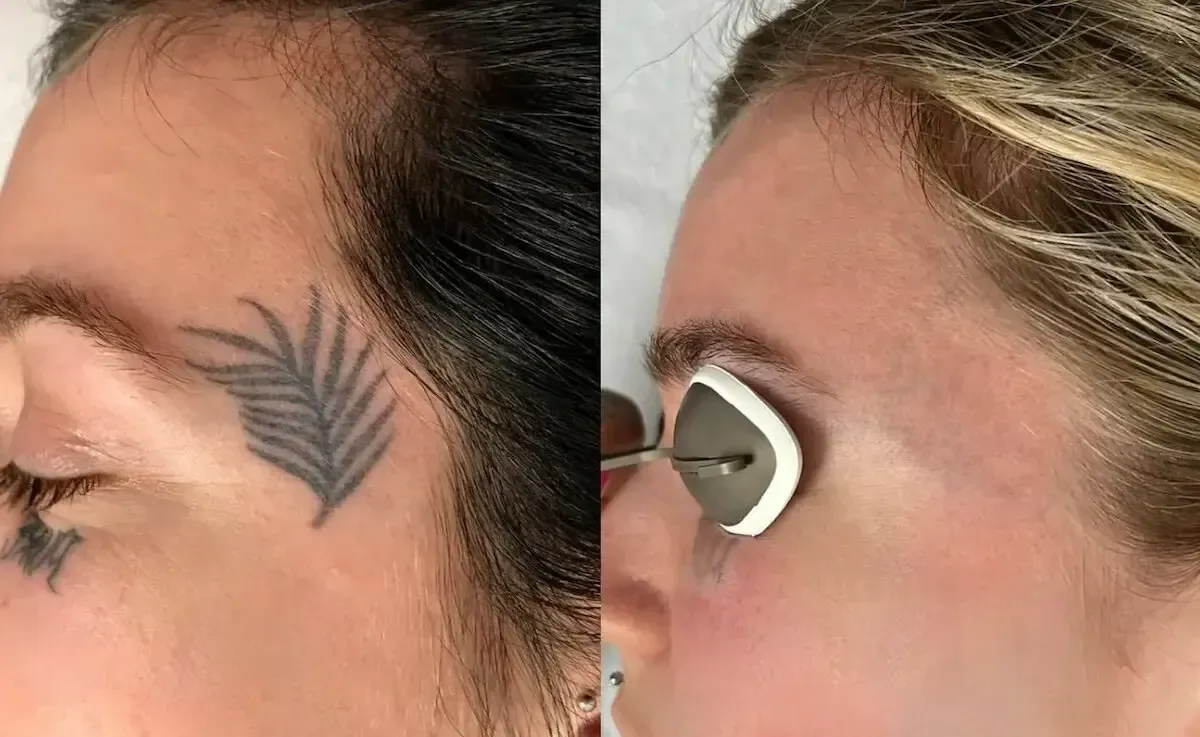
Face Tattoo Removal
After Four Treatments
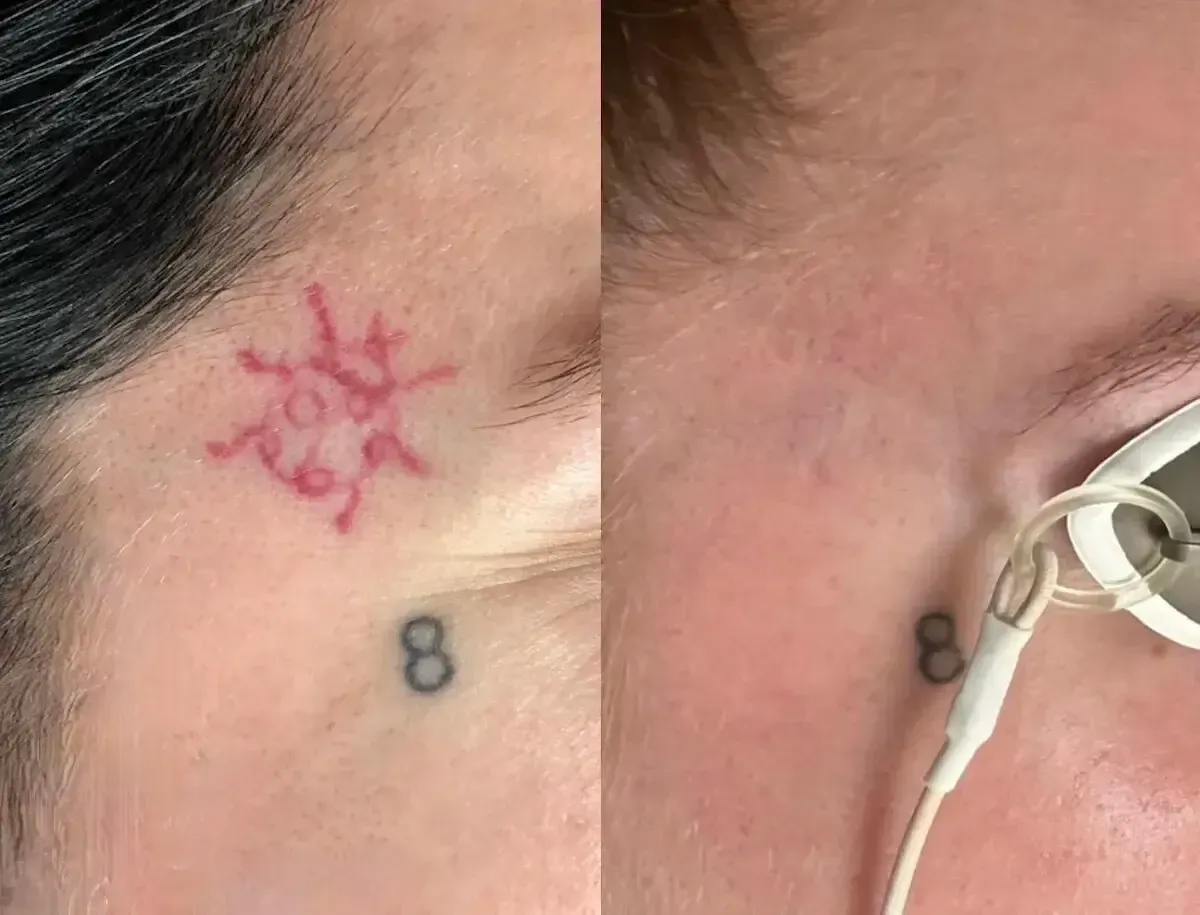
Face Tattoo Removal
Another NIXX Success
Three Wavelengths, One Reason: Your Ink Is Not All the Same
Different ink colours absorb different wavelengths of light. Some inks respond to one wavelength, but not another. That’s why a single-wavelength laser can remove black ink but struggle with green: it’s not about power, it’s about physics.
At NIXX, we use PicoSure’s two core wavelengths:
- 755 nm — the primary wavelength, effective on black, blue, and green inks that sit deep in the skin.
- 532 nm — suited to warmer pigments: certain reds, oranges, and yellows.
Together, these two wavelengths cover the majority of tattoo ink colours encountered in practice. For clients with deeper melanin-rich skin tones where 1064 nm becomes the safer choice, that wavelength is available through our Hollywood Spectra, which is part of why having both systems matters. Part 3 of this series covers how we decide which laser, or combination of lasers, fits your tattoo and skin tone.
In reality, the wavelength isn’t chosen just once for the whole tattoo. It’s picked for each section and colour, based on how your skin responds. This isn’t a sales tactic. It’s simply how science works, and why a proper in-person assessment changes what's possible.
The colour-specific claims here aren't just technical theory. Peer-reviewed research published in journals including the
Archives of Dermatology and Lasers in Surgery and Medicine has documented PicoSure's clearance of blue, green, and yellow inks: colours that older lasers often can’t remove. PicoSure has been the subject of over 26 published clinical studies, which is more documented validation than most laser systems in this space can claim.
What PicoSure Gives a Technician to Work With
The short pulse is the key feature, but what really matters is the control PicoSure gives during each session.
Variable spot sizes let the technician work precisely: tighter on small, detailed areas, wider on larger fields, without over-treating skin that's already been hit in a previous pass. Adjustable fluence settings mean the energy level can be pushed on dense, stubborn ink or dialled back where the skin needs more cautious handling. For ink that resists standard settings entirely, PicoSure includes a boost mode that further shortens the pulse width, applying more concentrated force to recalcitrant pigment without simply cranking up the heat. Wavelength flexibility means the right option for each pigment can be selected mid-session rather than locked in at the start.
All this technology only works if the person using it knows what they’re doing. A powerful laser in the wrong hands won’t give better results: it can actually cause more skin damage. The equipment sets the limit, but the technician decides what results you get.
Ready to NIXX Your Ink?
If there's a tattoo you've been tolerating rather than owning, now is a great time to do something about it. Our Vancouver clinic is ready to help you take the first step. Whether you want full removal, a strategic fade for a cover-up, or just honest answers about what's possible, we're here for it.
Your skin. Your choice. Your fresh start.
Recent Posts