Can Lasers Remove Green Ink? What to Expect
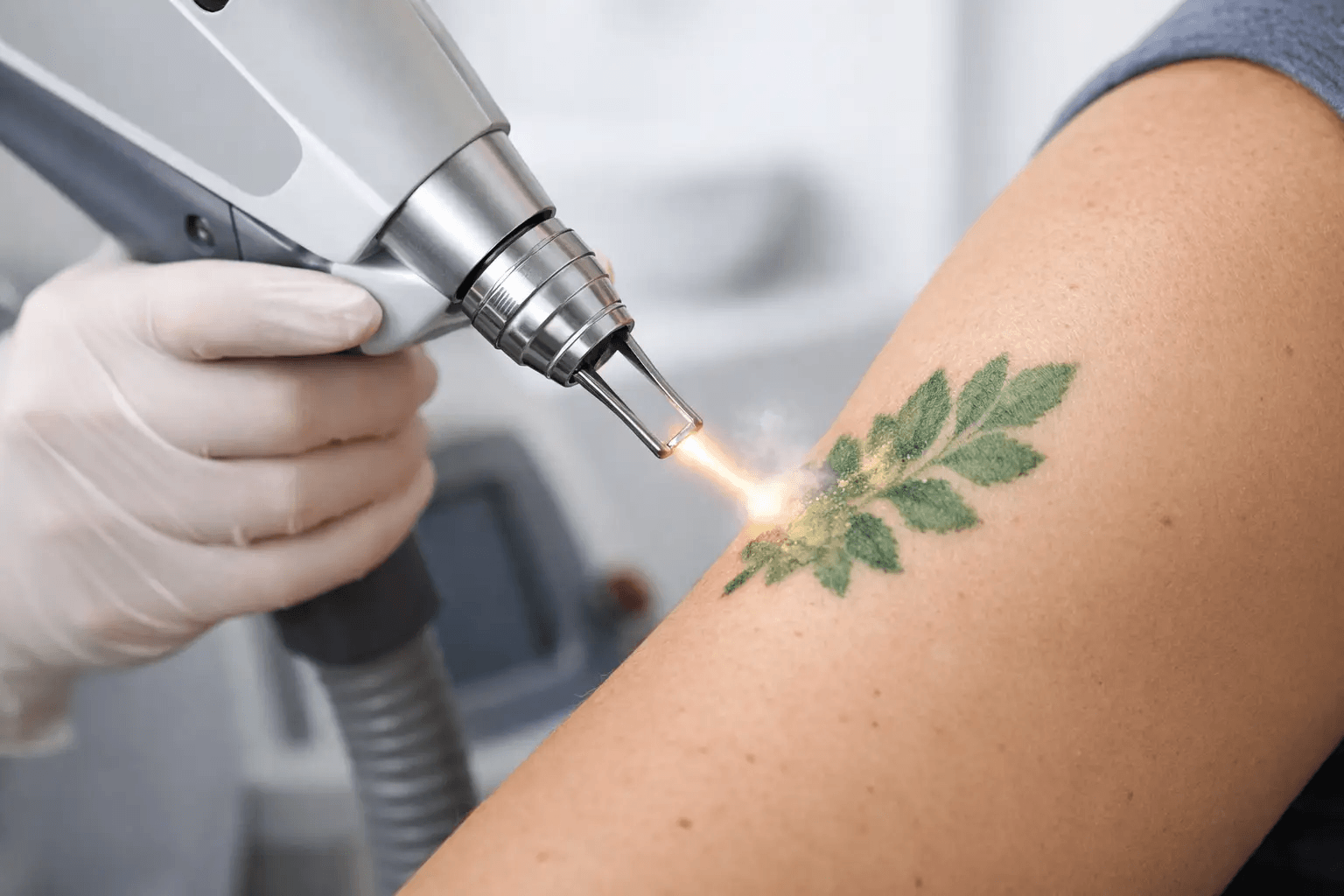
A green tattoo can be one of the more frustrating colours to live with when it no longer fits your style, especially if it is part of a design you otherwise still like. So, can lasers remove green ink? Yes, often very successfully, but green is not a one-setting, one-session colour. Its response depends on the precise shade, the pigments used, how densely it was tattooed, and whether the laser wavelength is well matched to it.
For full removal or a carefully planned
cover-up, green ink requires an assessment that goes beyond simply noting that it is “green." A pale mint, a deep forest green and a yellow-green all absorb laser energy differently. That is why a tailored treatment plan matters.
Why Green Ink Can Be Challenging
Laser tattoo removal works through selective light absorption. The laser delivers extremely short pulses of energy that are absorbed by tattoo pigment, breaking the ink into smaller particles. Your body then gradually clears those particles through its natural immune processes between treatments.
Each ink colour absorbs particular wavelengths of light more readily than others. Black is usually the most responsive because it absorbs a broad range of wavelengths. Green reflects more light, which means it requires a more precise wavelength match to break down effectively.
The difficulty also lies in the ink itself. Tattoo inks are not regulated to a single universal formula, and two green tattoos that look similar on the skin may contain entirely different pigment blends. Some greens contain blue or yellow components. Others may be mixed with white ink to create a lighter shade, which can affect how the tattoo responds during its removal journey.
A green tattoo is not automatically difficult to remove, but it should never be approached with a generic protocol. The best plan considers the visible colour, tattoo age, saturation, depth, placement and your skin’s response after each session.
Can Lasers Remove Green Ink With the Right Wavelength?
Yes. Green ink generally responds best to wavelengths that sit in the red to near-infrared part of the spectrum, particularly around 755 nm. This wavelength can be highly effective because green pigment absorbs it more readily than it absorbs the wavelengths commonly used for black ink.
At NIXX Tattoo Removal, a dual-laser approach allows treatment planning to account for the tattoo's colour composition rather than relying on a single platform for every client.
PicoSure technology can be valuable for green and blue-green pigments, while the
Hollywood Spectra platform supports treatment of other colours within the same design, including black and darker ink. This matters when a tattoo features green leaves, blue shading, black outlines, and a warmer background colour, all in one piece.
The choice of laser is only one part of the decision. Settings must be adjusted to the individual tattoo and skin, then reviewed over time. A treatment that creates an appropriate response without placing unnecessary stress on the skin is more useful than chasing aggressive settings for a quicker-looking result.
Not Every Shade of Green Behaves the Same Way
Darker, cooler greens often have a blue component and may respond differently from warmer greens with more yellow pigment. Bright neon greens, pastel greens and inks lightened with white can be less predictable. In some cases, a tattoo may fade in stages: first becoming duller or greyer, then gradually separating into the underlying colours that were blended to create the original green.
This is normal. It does not necessarily mean treatment has stalled. It may mean the most responsive component of the pigment has broken down first, leaving another pigment that requires a different approach or additional sessions.
What Determines How Quickly Green Ink Fades?
No responsible provider can promise a fixed
number of sessions based on colour alone. Green is an influential factor, but it is only one of several.
The tattoo’s age and density matter. Older tattoos may have already faded naturally and can sometimes clear more readily than fresh, heavily saturated work. Professional tattoos often contain more concentrated pigment at a more consistent depth, while amateur work can vary widely in depth and composition.
Placement matters too. Tattoos in areas with strong circulation, such as the upper arm or torso, may clear differently than
tattoos on the fingers, ankles, or feet. Your immune system does much of the clearing work between appointments, so overall health, healing habits and proper spacing all play a role.
Skin tone and skin history are equally relevant. The treatment plan should account for your skin’s natural pigmentation, tendency toward post-inflammatory hyperpigmentation or hypopigmentation, history of scarring, and any previous reactions to tattooing. Protecting skin quality is central to a good result, particularly when the goal is a clean canvas for future tattoo work.
Technicians Who Understand Ink
Every
technician at NIXX comes from a background of working in the tattoo industry. That background matters when treating green tattoos specifically. Understanding how ink was applied, at what depth, and with what pigment composition informs how the laser is used. It's the difference between a technician who has memorized a protocol and one who understands why the protocol exists.
Treatment Intervals Are Part of the Result
It can be tempting to book treatments as close together as possible when a tattoo is bothering you. Green ink, however, needs time. The laser shatters pigment during the appointment, but your body needs weeks
afterwards to process and remove it.
Treatment intervals are usually measured in weeks, not days. The appropriate timing depends on how your skin heals, how much fading occurs and the treatment objective. Giving the skin enough recovery time can support better clearance while reducing the risk of irritation, unwanted pigment change or scarring.
Between sessions, keep the treated area clean, follow the
aftercare provided, avoid picking or friction, and protect it from sun exposure. Tanned or sun-stressed skin can limit treatment options and increase the risk of uneven pigmentation. A laser removal plan is not only about what happens in the treatment room; much of the visible progress occurs during the healing period.
Full Removal Versus Fading Green for a Cover-up
The right endpoint is personal. Some clients want green ink removed as completely as their skin and pigment will allow. Others do not need full clearance. They need enough lightening to give a tattoo artist more freedom for a cover-up.
For cover-up preparation, selective fading can be particularly useful. Rather than removing the whole tattoo, treatment may focus on a dark green block, a heavy outline or a portion of the design that would otherwise show through new work. This can preserve more options for the artist, including lighter colours, finer detail and a design that does not need to be significantly larger or darker than the original.
It is worth speaking with your tattoo artist early if you already have a cover-up in mind. Their preferred placement, palette and design direction can help shape the removal plan. A specialist removal provider can then work towards a practical level of fading, rather than treating beyond what the new tattoo actually requires.
What to Expect at a Consultation
A proper consultation for green tattoo removal should be specific. The practitioner should examine the tattoo under good lighting, ask about its age and tattoo history, discuss whether it has been treated before, and understand whether your goal is full removal, selective removal or cover-up fading.
You should also discuss medication, skin conditions, sun exposure, previous scarring and any history of pigment changes after skin injury. These details are not administrative extras. They help determine whether treatment is appropriate now, which laser approach may suit the tattoo, and how conservatively the skin should be treated.
Before-and-after progress photographs are useful because tattoo fading is gradual. Day to day, it can be difficult to see change in a tattoo you look at constantly. Comparing images taken under similar conditions gives a clearer view of how the green pigment is responding and whether the plan needs adjusting.
A Realistic Path Forward for Green Tattoos
Green tattoo removal is a process of informed decisions, careful treatment and patience with the skin’s recovery cycle. Modern laser technology has made more green pigments treatable than many people assume, but no two green tattoos come with the same timeline or endpoint.
If a green tattoo no longer belongs in your collection, the most helpful next step is not to guess how many sessions it will take. Have the ink, your skin and your future tattoo plans assessed together, then build a course of treatment around the result you actually want.
When you're ready, we're here 🤍.
NIXX Laser Tattoo Removal is located in Vancouver, BC, and is connected to
Adrenaline Studios. Our technicians come from the tattoo industry and are laser-certified, so we understand both ink and skin. Laser treatment is not recommended during pregnancy or while breastfeeding, and some medications may require a test spot first; we'll cover all of this during your consultation.
Recent Posts