Why Fall is the Best Time to Start Tattoo Removal

Summer's over. The tank tops are back in the drawer, the long sleeves are out, and that tattoo you spent all season a little self-conscious about is comfortably covered again. Which is exactly why now is the moment most people overlook.
Here's the thing about laser tattoo removal: it works on a timeline, not a switch. Sessions are spaced weeks apart, and the ink fades gradually between them. So if your goal is to feel good in your skin by next summer, the smartest time to start isn't next spring, when you suddenly remember. It's now, while the sun is low and the calendar is on your side.
This post breaks down the math behind that, why cooler months are genuinely easier on your skin, and how to make the most of the season ahead.
The Math That Makes Fall the Smart Season
Laser tattoo removal sessions are typically spaced eight to twelve weeks apart. We favour the longer end, since giving your skin more time to heal and clear the ink between sessions tends to produce better results. That gap isn't arbitrary. Your skin needs time to heal, and your body's lymphatic system needs time to clear the fragmented ink between treatments. Rushing it doesn't speed up your results. Spacing it properly does.
Now look at what that spacing means when you start in autumn.
Begin in September or October, and by the time Vancouver's beaches are worth visiting again, you could have three to four sessions behind you. At eight-week spacing, that's four sessions comfortably complete before summer. At the more conservative twelve-week spacing our senior technicians often prefer, three sessions still land you well ahead of the season.
Three to four sessions won't erase most tattoos completely. That's a longer arc, and we'll always be honest with you about it. But it's enough to make a real, visible difference. For many clients, it means ink that's noticeably lighter and far easier to live with. For smaller, older, or
fade-for-cover tattoos, three to four sessions can be most or all of the journey.
The point is simple. If you wait until spring to start, you're only one or two sessions in when the sun returns. Start now, and you arrive at summer with a genuine head start instead of a fresh regret about not starting sooner.
Cooler Months Are Easier on Your Skin
There's a practical reason removal specialists quietly prefer fall and winter starts, and it comes down to the sun.
Treated skin and UV exposure don't mix. Before and after every session, the area needs to stay protected from direct sunlight, because tanned or sunburned skin reacts more unpredictably to laser energy and raises the risk of hyperpigmentation. In summer, that protection takes real effort. You're actively avoiding the beach, covering up on hot days, and reapplying sunscreen constantly.
In fall and winter, that whole challenge softens. The days are shorter, the UV Index is lower, and you're already dressed for the weather. Protecting healing skin becomes far less of a daily negotiation.
To be clear, sun protection still matters year-round. In Vancouver, UV can reach levels that call for protection even outside summer, so daily SPF on the treated area remains part of the routine. But the cooler months make staying consistent considerably easier, and consistency is one of the biggest factors in how well your skin responds.
Your Healing Happens Out of Sight
There's a quieter benefit to starting now, too.
After each session, it's normal to see some temporary redness, swelling, or light blistering as the skin does its work. In summer, that's happening on skin you're trying to show. In fall and winter, it's happening under a sweater.
You get to move through the least visible part of the process during the season when visibility matters least, and arrive at summer showing the results instead of the recovery. For anyone who's felt self-conscious about the in-between stage, the timing works entirely in your favour.
What the Process Actually Involves
If you're new to laser removal, here's the honest version, without the overselling.
Most clients describe each session as feeling like a rubber band snapping against the skin. It isn't painless, but it's brief and very manageable. We run a cooling fan throughout to keep you comfortable, and most sessions take only a few minutes depending on the size of the tattoo. You won't lose days to recovery. Most people head straight back to their routine.
What sets the results apart is the technology behind them. NIXX runs a dual-laser system: the
PicoSure by Cynosure paired with the
Hollywood Spectra. Most Vancouver clinics work with one laser. Having both lets our technicians match the right wavelength to your specific ink colours and skin tone, rather than forcing one tool to do everything. Different inks respond to different wavelengths, so that flexibility is a genuine advantage, not a talking point. You can read more about how we choose between them on our
About page.
And the technology is only half of it. Every technician on
our team comes from a tattooing background, which means they understand ink, skin, and depth in a way most removal providers don't.
How Many Sessions Before Summer, Really?
The most honest answer is that it depends on your tattoo. The factors that shape your timeline include:
- Size and placement. Larger pieces and lower-circulation areas like hands and feet tend to take longer.
- Ink colours. Black and dark inks clear fastest. Bright colours like yellows and light blues take more sessions.
- Age and density. Older, faded tattoos often respond more quickly than fresh, heavily saturated ones.
- Your goal.
Fading for a cover-up needs far fewer sessions than complete removal.
Most full removals take six to twelve sessions overall. Starting in fall doesn't change that total, but it changes where you'll be standing when summer arrives. Three to four sessions of visible progress, timed for the season you most want to feel good in your skin, is a meaningful place to be. For a fuller breakdown, our post on
how many sessions removal takes covers the variables in detail.
Your
free consultation is where this stops being general and becomes specific to you. We'll assess your tattoo and give you a realistic estimate for your ink and your skin, including how far three to four sessions is likely to get you before next summer.
Making the Season Count
A few simple steps set you up for the best possible results:
- Keep the area out of direct sun. Easier in fall, but still worth the habit. Apply daily SPF to the treated area.
- Hydrate your skin. Well-moisturised skin responds better and heals faster. Drink water and use a gentle, fragrance-free moisturiser on the area in the weeks leading up to your session.
- Skip harsh actives before your appointment. Set aside exfoliants, retinoids, and self-tanners on the treated area in the days beforehand.
- Ease off blood thinners where you can. Avoid alcohol and, where appropriate, aspirin or ibuprofen in the 24 hours before, as these can increase bruising. Never stop prescribed medication. Just mention it at your consultation.
- Come in clean.
Arrive with clean skin, free of lotion or makeup on the treatment area. Apply your numbing cream at home about one to one and a half hours before, as directed.
Fall Tattoo Removal: Common Questions
If I start this fall, will my tattoo be gone by summer?
For most tattoos, three to four sessions means significant, visible fading rather than complete removal. For smaller, older, or fade-for-cover pieces, it can be most or all of the way there. Full removal typically takes six to twelve sessions, so starting in fall puts you well along that path by summer rather than at the finish line. Your consultation will give you a realistic picture for your specific ink.
Is fall really better than summer to start?
Both seasons work, and each has its own logic. Summer captures the motivation while it's fresh. Fall gives you an easier healing window with lower UV, natural coverage during recovery, and a runway that lines up neatly with next summer. If you missed a summer start, fall is arguably the smarter catch-up. You can read the case for a summer start here.
How far apart are the sessions?
Eight to twelve weeks. The gap lets your skin heal and your body clear the fragmented ink between treatments, which is essential to good results. Our senior technicians often work on twelve-week spacing for optimal skin health.
Does it hurt?
Most clients compare it to a rubber band snap against the skin. It's brief and manageable, and we use a cooling fan throughout. Our post on what removal feels like goes into more detail.
Can I still start if I want a cover-up rather than full removal?
Absolutely. Fade-to-cover lightens an existing tattoo to give your artist a cleaner, more neutral canvas, and it needs far fewer sessions than complete removal. A fall start means your skin could be ready for new work by summer.
When You're Ready, We're Here
There's no wrong reason to want your skin back, and no pressure to decide today. If there's a tattoo you've been tolerating rather than owning, the season ahead is quietly the best window you'll get to do something about it.
Your first step is a free, no-obligation consultation at
our Kitsilano studio. We'll look at your tattoo, answer every question honestly, and show you exactly what a fall start could mean by the time summer comes back around.
Curious what's possible? Browse our
Before & After gallery or check pricing on our
pricing page.
NIXX Laser Tattoo Removal is located in Vancouver, BC, and is connected to
Adrenaline Studios. Our technicians come from the tattoo industry and are laser-certified, so they understand both ink and skin. Laser tattoo removal is not recommended during pregnancy or while breastfeeding, and some medications may require a test spot first; we'll cover all of this during your consultation.
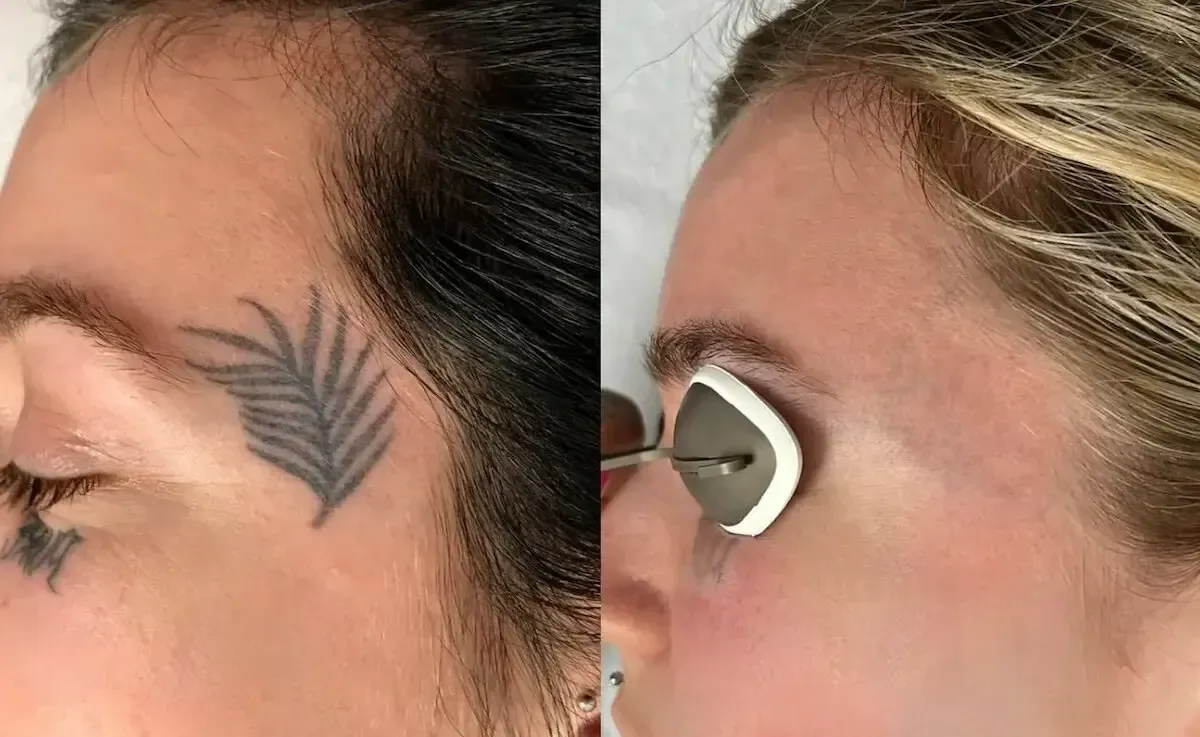
Face Tattoo Removal
After Four Treatments
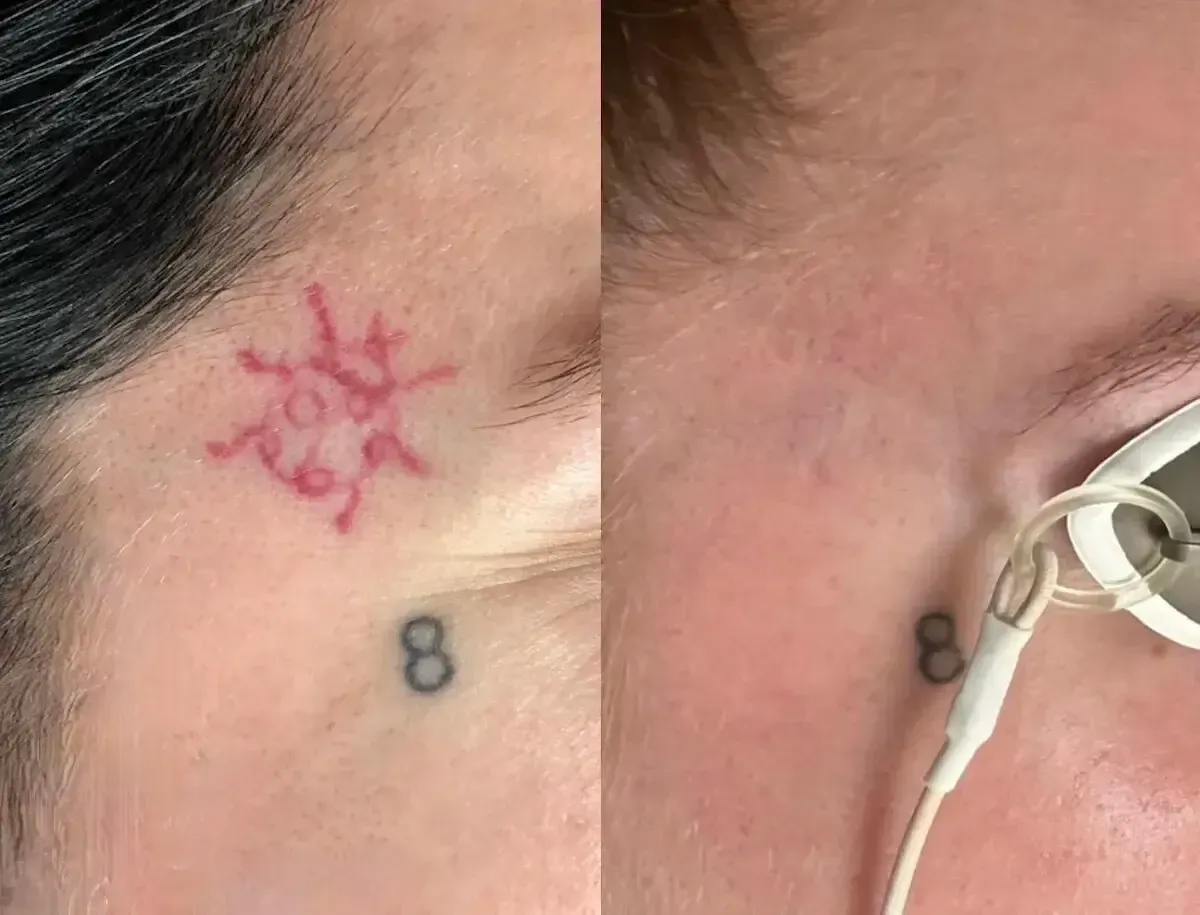
Face Tattoo Removal
Another NIXX Success
Three Wavelengths, One Reason: Your Ink Is Not All the Same
Different ink colours absorb different wavelengths of light. Some inks respond to one wavelength, but not another. That’s why a single-wavelength laser can remove black ink but struggle with green: it’s not about power, it’s about physics.
At NIXX, we use PicoSure’s two core wavelengths:
- 755 nm — the primary wavelength, effective on black, blue, and green inks that sit deep in the skin.
- 532 nm — suited to warmer pigments: certain reds, oranges, and yellows.
Together, these two wavelengths cover the majority of tattoo ink colours encountered in practice. For clients with deeper melanin-rich skin tones where 1064 nm becomes the safer choice, that wavelength is available through our Hollywood Spectra, which is part of why having both systems matters. Part 3 of this series covers how we decide which laser, or combination of lasers, fits your tattoo and skin tone.
In reality, the wavelength isn’t chosen just once for the whole tattoo. It’s picked for each section and colour, based on how your skin responds. This isn’t a sales tactic. It’s simply how science works, and why a proper in-person assessment changes what's possible.
The colour-specific claims here aren't just technical theory. Peer-reviewed research published in journals including the
Archives of Dermatology and Lasers in Surgery and Medicine has documented PicoSure's clearance of blue, green, and yellow inks: colours that older lasers often can’t remove. PicoSure has been the subject of over 26 published clinical studies, which is more documented validation than most laser systems in this space can claim.
What PicoSure Gives a Technician to Work With
The short pulse is the key feature, but what really matters is the control PicoSure gives during each session.
Variable spot sizes let the technician work precisely: tighter on small, detailed areas, wider on larger fields, without over-treating skin that's already been hit in a previous pass. Adjustable fluence settings mean the energy level can be pushed on dense, stubborn ink or dialled back where the skin needs more cautious handling. For ink that resists standard settings entirely, PicoSure includes a boost mode that further shortens the pulse width, applying more concentrated force to recalcitrant pigment without simply cranking up the heat. Wavelength flexibility means the right option for each pigment can be selected mid-session rather than locked in at the start.
All this technology only works if the person using it knows what they’re doing. A powerful laser in the wrong hands won’t give better results: it can actually cause more skin damage. The equipment sets the limit, but the technician decides what results you get.
Ready to Fade Your Ink by Summer 2027?
Book a 3-session package this September and receive 20% off. A fall start, a summer finish line. When you're ready, we're here.
*Offer valid on 3-session packages booked in September. Prepaid. No refunds.
Recent Posts