Tattoo Removal Scars: What You Need to Know
A tattoo does not have to become a permanent part of your skin story, but concerns about tattoo removal scars are completely reasonable. The short answer is that modern laser tattoo removal carries a low risk of scarring when it is planned and performed carefully. The more useful answer is that your original tattoo, your skin’s healing behaviour, the laser approach and what happens between appointments all matter.
Scarring is not an unavoidable trade-off for removing ink. It is, however, a reason to choose a specialist who treats the tattoo and the surrounding skin with equal care. Whether your goal is a clean removal or enough fading for a high-quality cover-up, protecting skin integrity should sit at the centre of the treatment plan.
Do Laser Treatments Cause Scars from Tattoo Removal?
Laser tattoo removal works by directing very short pulses of energy into tattoo pigment. The ink absorbs that energy, breaks into smaller particles and is gradually cleared by the body over time. A laser is not designed to cut, abrade, or remove layers of skin as older removal methods can.
That distinction matters. Properly selected laser settings target pigment beneath the skin’s surface while limiting unnecessary heat in surrounding tissue. For most suitable clients, this makes laser removal the preferred option when scarring is a key concern.
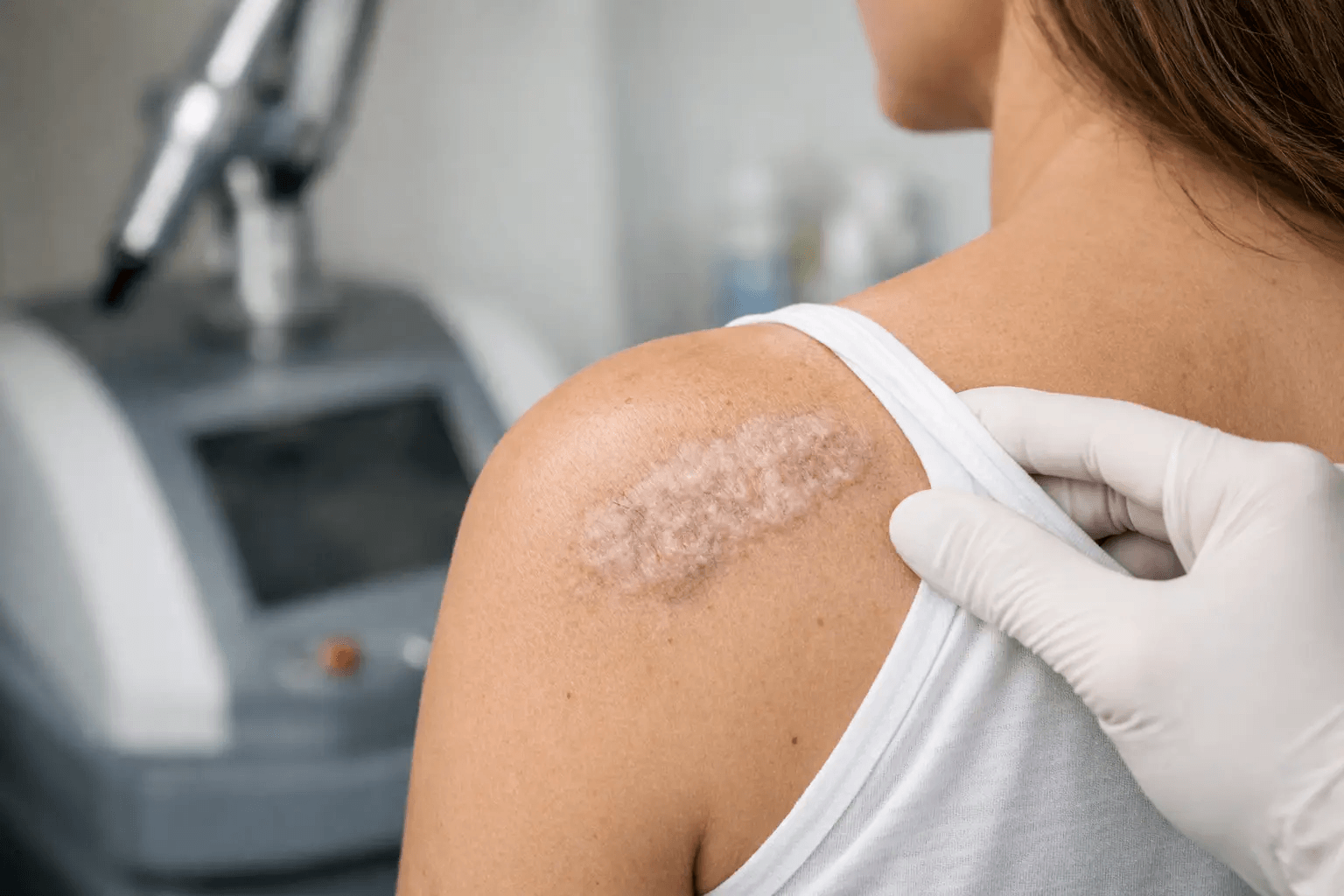
Still, no aesthetic treatment is entirely risk-free. Temporary responses such as redness, swelling, pinpoint bleeding, skin frosting, or small blisters can be a normal part of healing. These signs are not automatically scars. A scar is a lasting change in skin texture, such as a raised, indented, thickened or shiny area, that remains after the skin has healed.
In some cases, clients mistake pigment changes for scarring. Skin may temporarily become lighter or darker than the surrounding area after treatment, particularly in
skin that tans easily or in areas exposed to the sun. This is called hypo- or hyperpigmentation. It requires careful management, but it differs from a textural scar and often improves over time.
What Actually Raises the Risk of Tattoo Removal Scars?
The laser is only one part of the equation. The starting condition of the tattoo and skin can have a greater bearing on the final result than many people expect.
Existing Scar Tissue From the Tattoo
Some tattoos already sit over scar tissue. This can happen when the original tattoo was applied too deeply, repeatedly worked over, or healed poorly. Raised linework, uneven texture or areas that feel firmer than the nearby skin may indicate pre-existing scarring.
Laser treatment cannot erase scar tissue created during tattooing. It may remove or fade the pigment, making the texture more visible once the ink is gone. An experienced provider will assess this before treatment so your expectations reflect what is possible.
Excessive Treatment Intensity or Poor Spacing
More energy is not always better. Settings need to reflect the tattoo’s colours, density, depth, location, your skin tone and how your skin has responded previously. Treating too aggressively can create avoidable trauma. Treating too soon can do the same, because the skin and immune system have not had enough time to recover and process fragmented ink.
A tailored plan leaves appropriate time between sessions. This can feel slower than a one-size-fits-all schedule, but healing time is productive time. Your body continues clearing pigment after the appointment ends.
Picking, Friction and Infection During Healing
Aftercare has a direct role in scarring risk. Blisters and scabs can be alarming, particularly on visible tattoos, but picking at them is one of the clearest ways to interfere with normal healing. Friction from tight clothing, gym equipment or footwear can also irritate a treated area.
Infection is less common when aftercare is followed, but it needs prompt attention. Increasing pain, spreading redness, warmth, pus, fever, or a rash that worsens rather than settles should be assessed by a medical professional. Do not attempt to treat a suspected infection with home remedies or wait for the next laser appointment.
Individual Healing Tendencies
Some people are more prone to hypertrophic or keloid scarring, where scars become raised or extend beyond the original injury. A history of keloids, problematic surgical scars, or scars that have become unusually thick is essential information to share during consultation.
This does not automatically rule out treatment, but it changes the conversation. In some circumstances, the safest choice may be a more conservative approach, a test treatment or medical advice before proceeding.
How a Specialist Approach Helps Protect Your Skin
Tattoo removal is not simply a matter of applying one laser to every tattoo. Black and grey ink, for example, behaves differently from bright blues, greens, reds or resistant pastel shades. Dense, professional ink may require a different strategy than a lightly applied amateur tattoo. Placement matters too:
tattoos on hands, feet and lower legs can heal differently than tattoos on the upper arms or back.
At NIXX Tattoo Removal, treatment planning takes these variables into account. A
dual-laser approach using PicoSure and Hollywood Spectra technology allows the choice of wavelength and delivery to be matched more precisely to the ink and the treatment objective. That may mean
full removal, selective removal of one element, or controlled fading that leaves your tattoo artist enough clear skin to create a stronger
cover-up.
Aftercare That Reduces Avoidable Irritation
Your provider’s instructions should always take priority, as they are based on the treatment performed and your skin's response. In general, the aim is to keep the area clean, cool and protected while allowing it to heal without interference.
For the first few days, avoid heat, swimming, saunas, intense exercise and anything that rubs the area. Wear loose clothing where possible, keep hands away from blisters or scabs, and do not shave over treated skin until it has settled. Protecting the area from sun exposure is equally important. Freshly treated skin is more vulnerable to pigment changes, so keep it covered or use appropriate sun protection once the skin is intact.
If you are given a dressing, follow the guidance on when to remove or replace it. Avoid applying fragranced products, strong active skincare ingredients or thick occlusive creams unless they have been specifically recommended. The goal is not to over-treat the skin. It is to give it calm, uncomplicated conditions in which to repair itself.
When Should You Pause and Get Advice?
Some tenderness and local swelling are expected shortly after laser treatment. What is not expected is a reaction that becomes progressively more painful, increasingly red or visibly unwell over several days. Seek medical advice promptly if you notice signs of infection, severe blistering, a widespread allergic reaction or a wound that is not healing.
Contact your laser provider as well. They can document the response, advise on next steps and adjust future treatment planning. Honest communication matters more than trying to push through a reaction to stay on schedule.
Can You Remove a Tattoo if It Is Already Scarred?
Often, yes. Ink can still be lightened or removed from a scarred tattoo, but the result needs to be discussed carefully. Laser treatment may improve the appearance of the tattoo by reducing the ink's contrast, but it will not guarantee smooth, unmarked skin where the original application left textural changes.
For cover-up clients, this distinction is especially valuable. A skilled tattoo artist can work with faded ink and existing texture, but they need a realistic canvas. Selective fading may be more strategic than pursuing complete removal, particularly if the skin has prior scarring or the existing design only needs specific areas opened up.
The best starting point is an individual assessment rather than a promise based on someone else’s
before-and-after photos. Your tattoo has its own pigment history, placement and healing behaviour. A careful plan gives it the best chance to fade while respecting the skin that has carried it.
Want to understand what removal sessions actually feel like? Read
Does Laser Tattoo Removal Hurt? What to Expect for a clear picture of the experience from the first session forward.
NIXX Laser Tattoo Removal is
located in Vancouver, BC, and is connected to
Adrenaline Studios. Our technicians come from the tattoo industry and are laser-certified, so they understand both ink and skin. Laser tattoo removal is not recommended during pregnancy or while breastfeeding, and some medications may require a test spot first; we'll cover all of this during your consultation.
Ready to NIXX Your Ink?
If there's a tattoo you've been tolerating rather than owning, now is a great time to do something about it. Our Vancouver clinic is ready to help you take the first step. Whether you want full removal, a strategic fade for a cover-up, or just honest answers about what's possible, we're here for it.
Your skin. Your choice. Your fresh start.
Recent Posts