Fade-to-Cover: A Smarter Approach to Laser Tattoo Removal in Vancouver

Not everyone who walks through our door wants their tattoo gone. Plenty of people want something different in its place. Maybe the piece doesn't fit who you are anymore. Perhaps it was rushed, or never quite right, or it's a name you'd rather not explain. You're not looking for blank skin. You're looking forward to your next tattoo. And that changes everything about the smartest way to approach it.
This is where fade-to-cover comes in, and it's one of the most underrated decisions you can make before a cover-up.
What Fade-To-Cover Actually Means
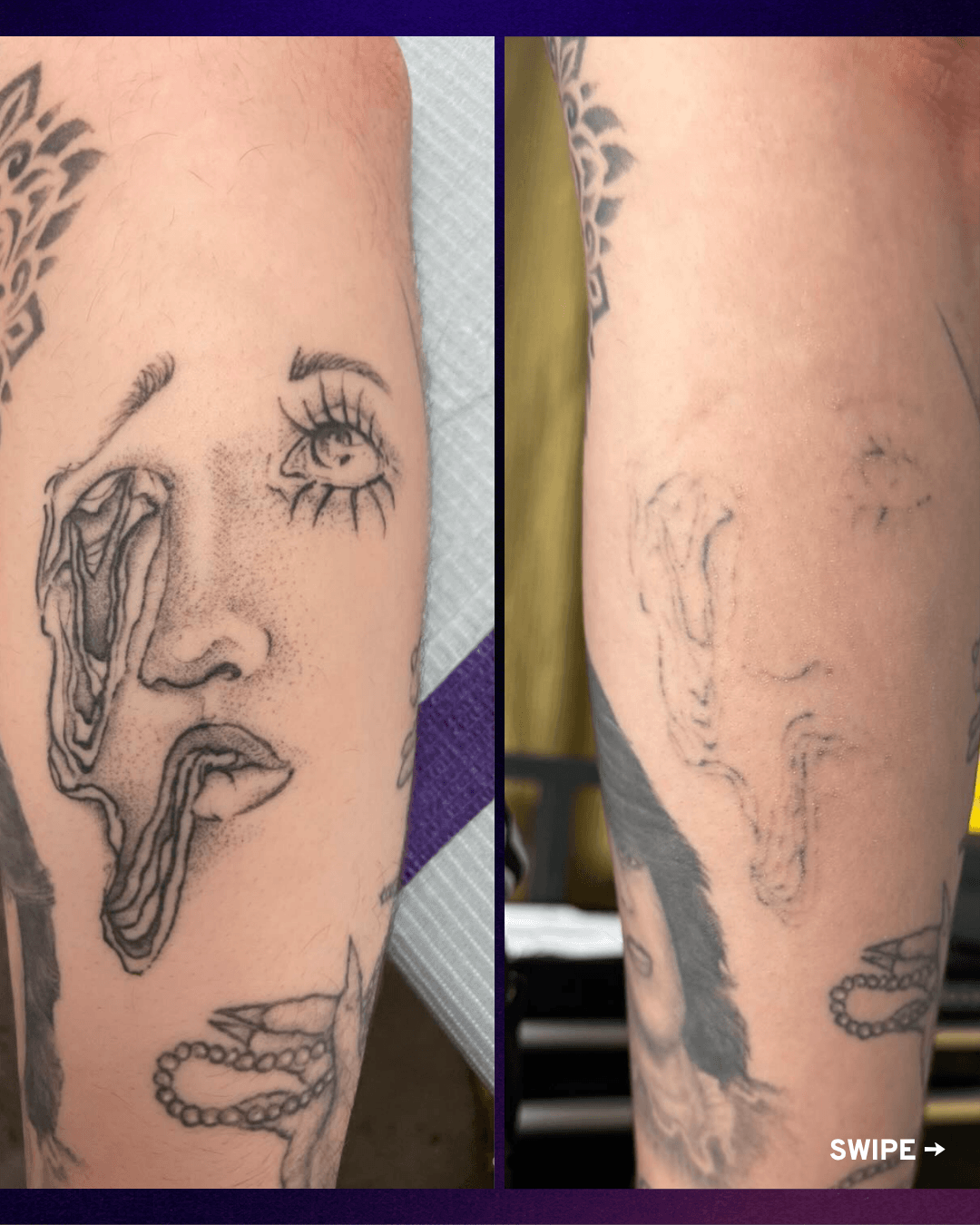
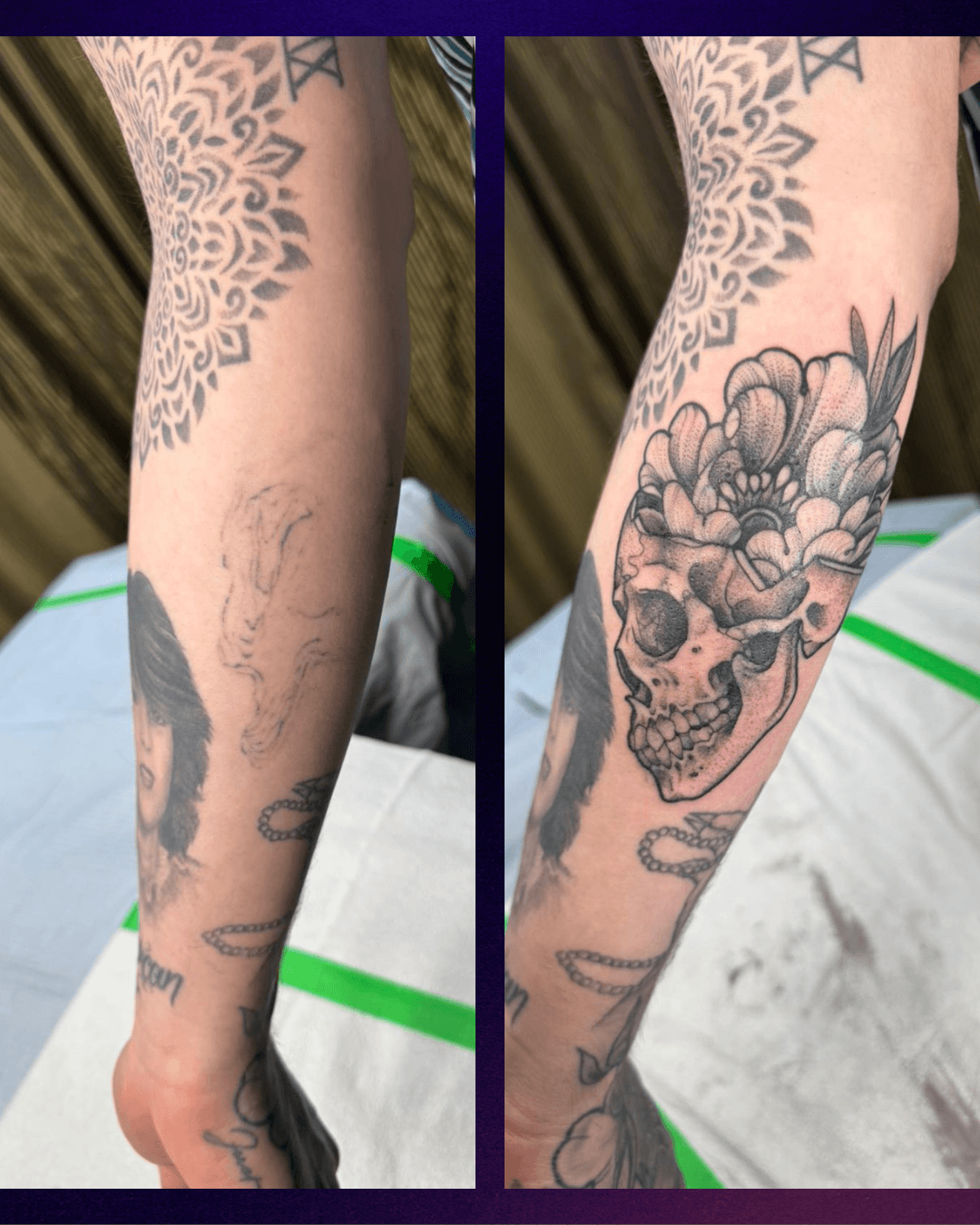
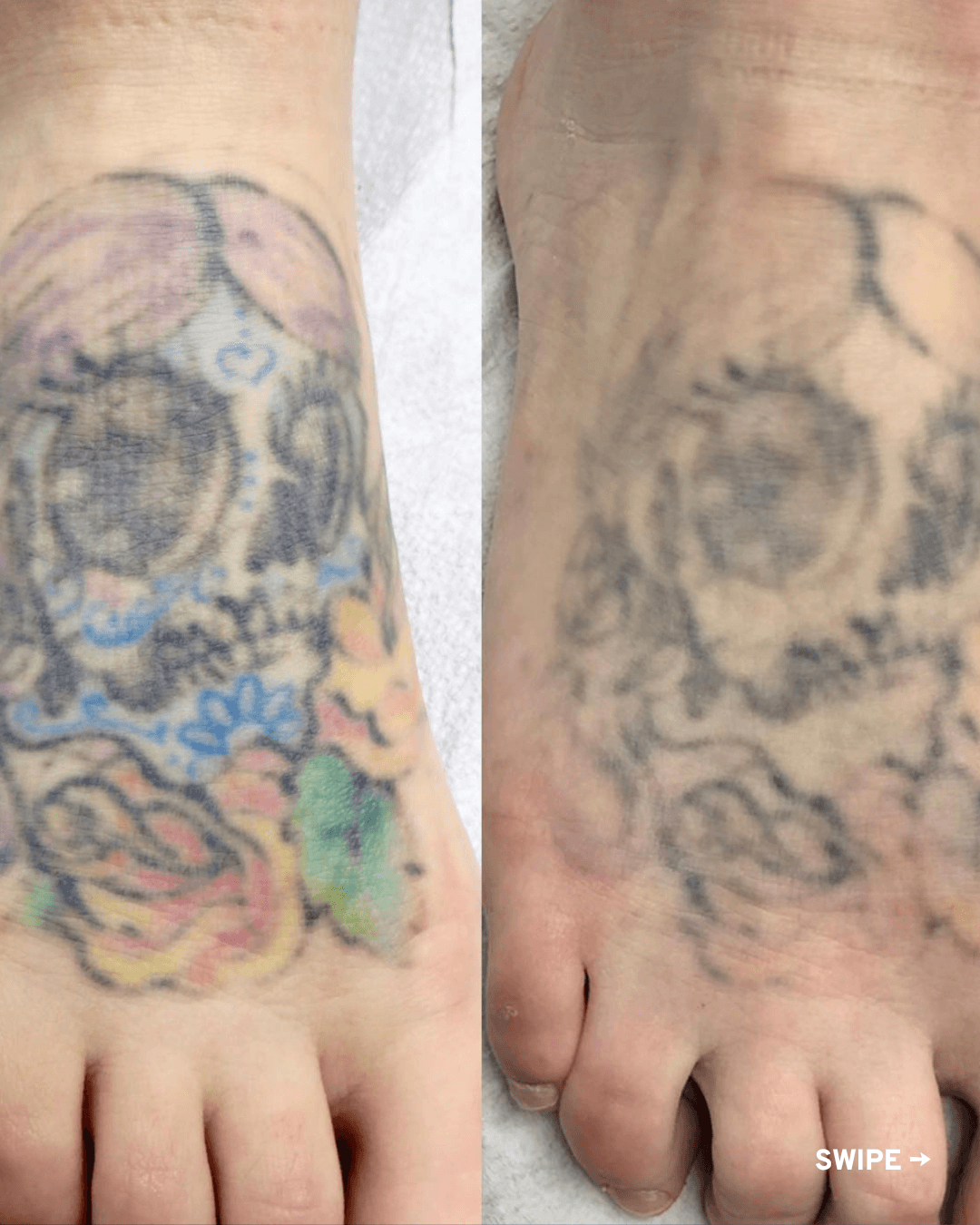
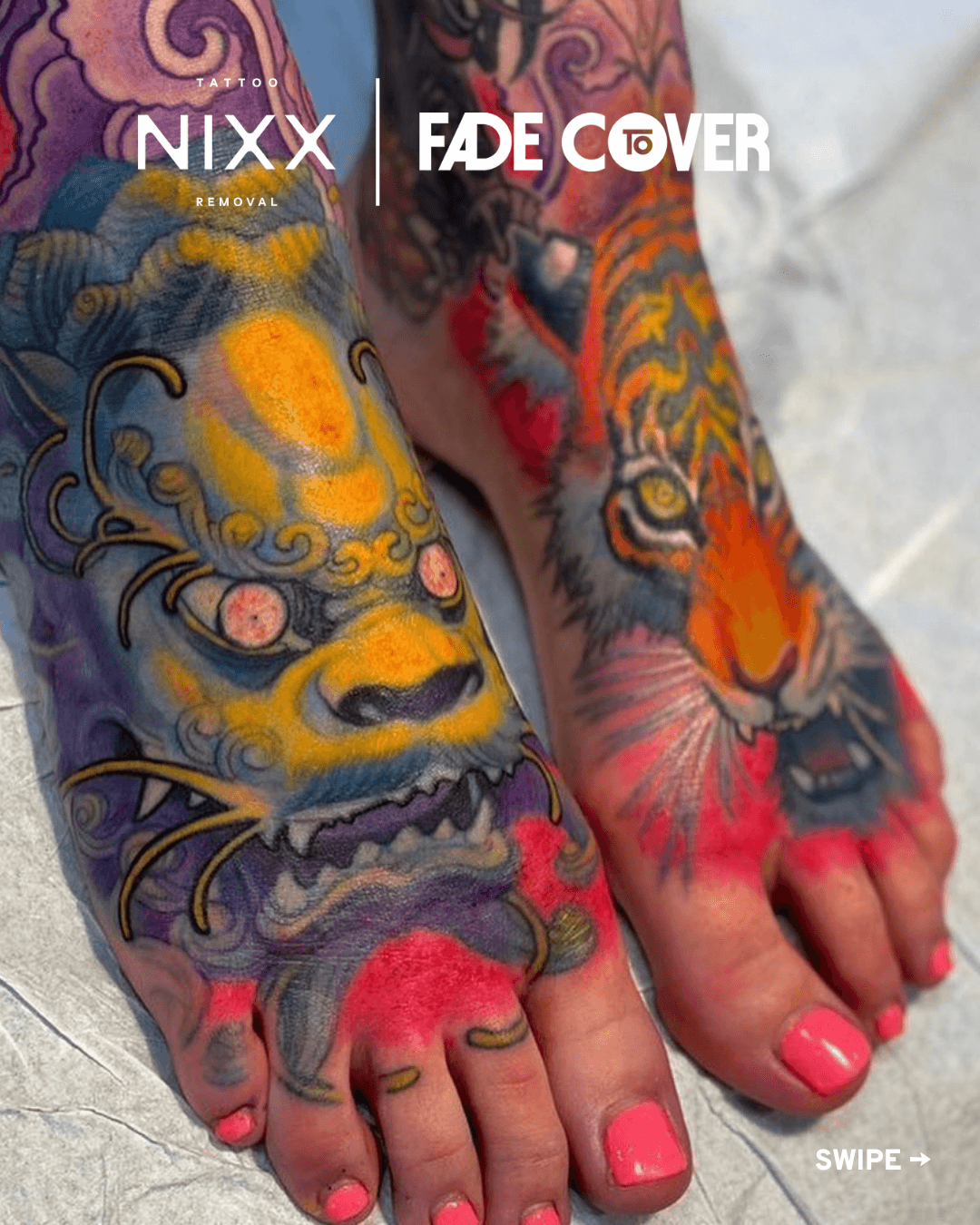
Fade-to-cover is precisely what it sounds like. Instead of fully removing your old tattoo, we lighten it with the laser, so your artist has a cleaner canvas to work on. You're not erasing the past. You're making room for what comes next.
Here's the difference that matters.
Full removal asks your skin to let go of every last particle of ink, which takes longer. Fading only lightens the tattoo enough to stop it from fighting the new design underneath. Fewer sessions, less time, and a far better result than covering old dark ink as-is.
Why Your Artist Will Thank You for Fading First
Talk to any experienced tattoo artist about cover-ups, and you'll hear the same frustration: dark, dense ink limits what they can do. When an old tattoo is still bold and saturated, the artist has to work around it. That usually means a bigger, darker, more complicated design than you actually wanted, chosen less because you love it and more because it's the only thing that'll hide what's underneath. The old tattoo dictates the new one.
Fading flips that. Lighten the existing ink first, and the rules change:
- More design freedom. Lighter colours, finer detail, and negative space all become possible when there's no dark ink bleeding through.
- A truer result. Your new tattoo can be the piece you actually want, not the one forced on you by what you're hiding.
- Better longevity. A cover-up sitting over faded ink tends to read cleaner and age better than one fighting a dark tattoo beneath it.
You don't need full removal for this. You just need enough fading to give the new design a fair shot.
How Much Fading Do You Actually Need?
This is the question that separates a good cover-up from a compromise, and the honest answer is: it depends on the new design.
A bold, dark cover-up needs less fading than a delicate, light, or detailed one. The more subtle the piece you want on top, the more the old ink needs to step back first. That's why the fade plan and the new tattoo really should be planned together, not in separate worlds.
Which is precisely the advantage of where we sit.
The Adrenaline Studios Advantage
NIXX is connected to Adrenaline Studios, and for fade-to-cover, that connection does real work.
It means your fading and your new tattoo don't have to happen in two disconnected places that never talk to each other. The plan can be coordinated so we fade to the level your future design needs, and your artist builds on a canvas prepared with their work in mind.
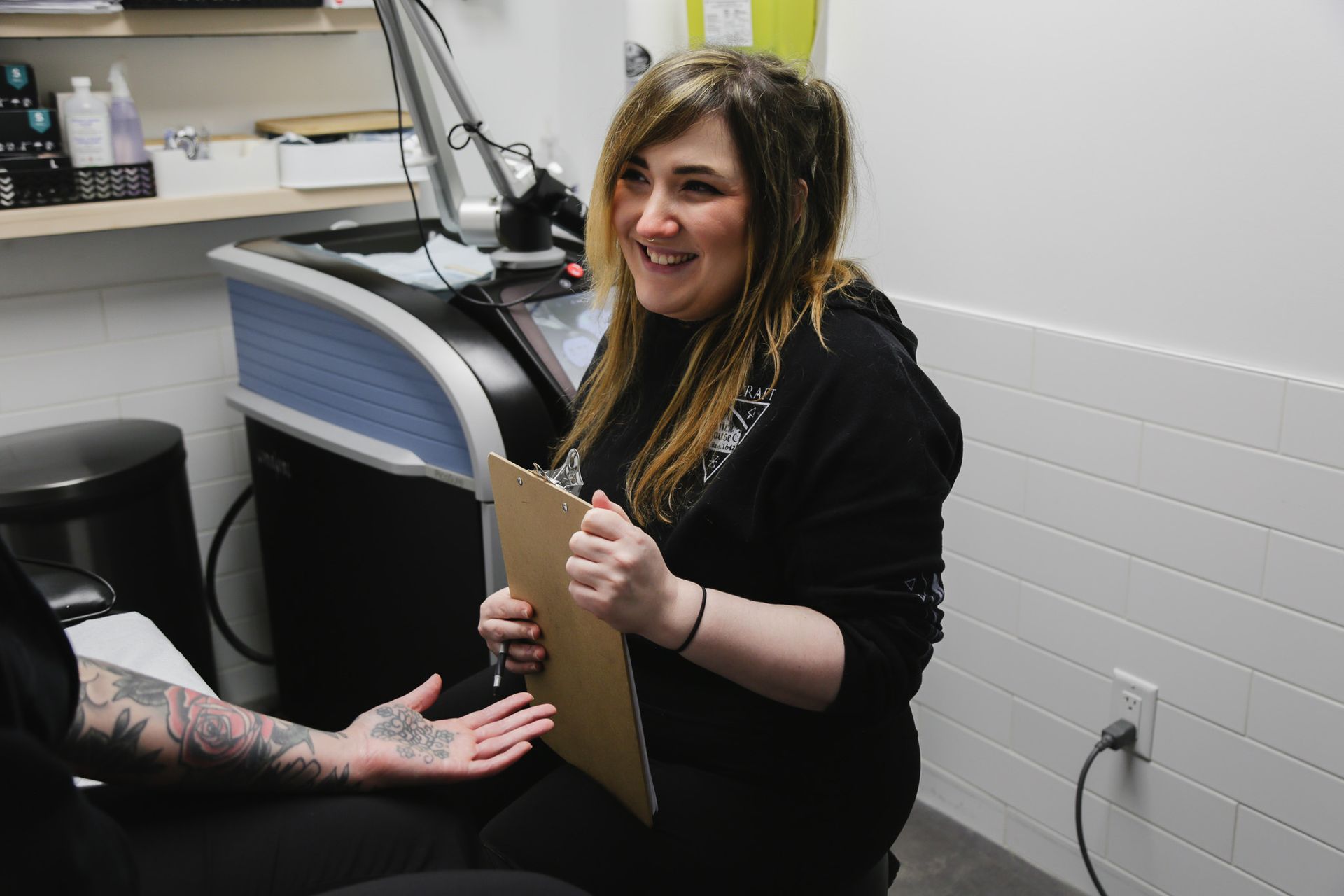
Our technicians come from the tattoo industry themselves, so they understand pigment, depth, and layering, not just how to run a laser. They know what an artist needs to see.
That shared understanding is the whole point. We're not guessing at how much to fade. We're fading toward a specific creative goal.
Why the Right Laser Matters for Fading
Fading well isn't about blasting the tattoo as hard as possible. It's about controlled, even lightening that protects your skin so it's ready for new ink.
Older nanosecond and Q-switch lasers, which some Vancouver clinics still use, rely on heat and can be rougher on the surrounding skin. For a cover-up, skin health is everything. You're going to tattoo over this area again, so the last thing you want is damaged or poorly healed skin underneath.
NIXX uses
PicoSure, which shatters ink with an ultra-fast photomechanical pressure wave rather than relying on heat. That generally means gentler healing and skin that's in better shape for your artist to work on. It also handles the full range of colours, so stubborn tones in your old piece don't stall the plan.
One important note on timing: after your final fading session, you'll wait about three months before getting the new tattoo. That gives your skin time to fully heal and settle, so your cover-up goes onto a healthy foundation. We'll build that window into your plan from the start.
Who Fade-To-Cover Is For
You might be a suitable candidate if:
- You want a new tattoo where an old one currently sits
- Your existing piece is too dark or detailed for the cover-up you have in mind
- You've been told your dream design "won't work" over your current tattoo
- You're not attached to full removal; you just want a better canvas
- You'd rather invest in fewer sessions than commit to complete clearance
If any of that sounds like you, fading first is very likely the smarter path.
Give Your Artist Room to Work
Fade-to-cover is the quiet secret behind cover-ups that actually look good. Lighten the old ink, give your artist room to work, and end up with the tattoo you genuinely want instead of a compromise built around what you're hiding. It usually takes fewer sessions than full removal, it opens up your design options, and when the fading and the new piece are planned together, the whole thing just works better.
Book your free consultation at NIXX, and let's plan the canvas for your next tattoo. When you're ready.
NIXX Laser Tattoo Removal is located in Vancouver, BC, and is connected to Adrenaline Studios. Our technicians come from the tattoo industry and are laser-certified, so they understand both ink and skin. Laser tattoo removal is not recommended during pregnancy or while breastfeeding, and some medications may require a test spot first; we'll cover all of this during your consultation.
Face Tattoo Removal
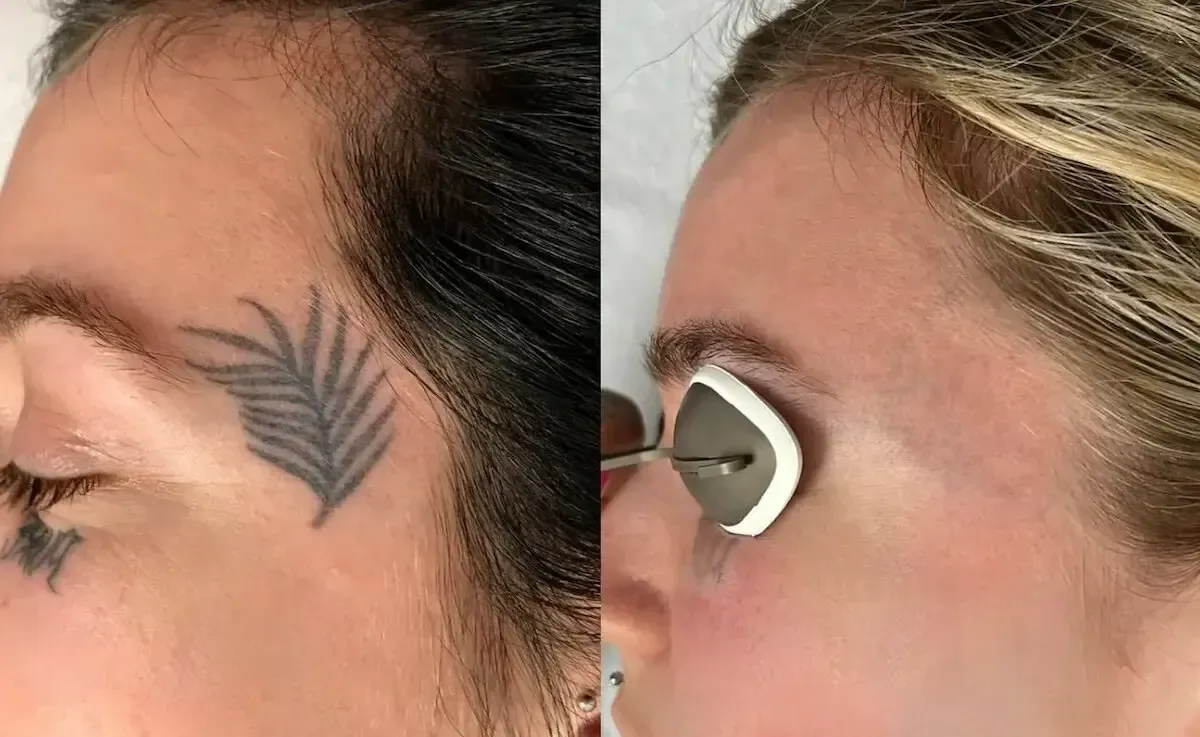
After Four Treatments
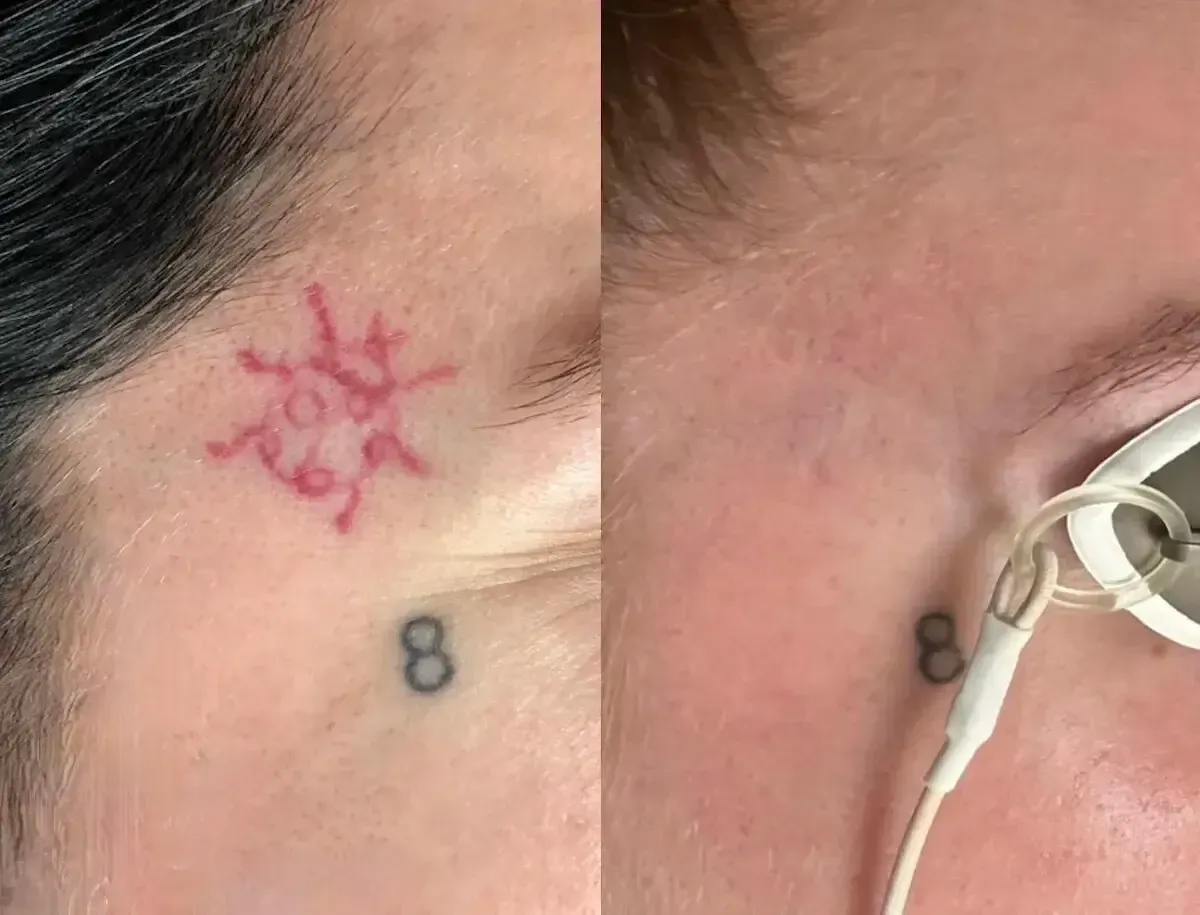
Face Tattoo Removal
Another NIXX Success
Three Wavelengths, One Reason: Your Ink Is Not All the Same
Different ink colours absorb different wavelengths of light. Some inks respond to one wavelength, but not another. That’s why a single-wavelength laser can remove black ink but struggle with green: it’s not about power, it’s about physics.
At NIXX, we use PicoSure’s two core wavelengths:
- 755 nm — the primary wavelength, effective on black, blue, and green inks that sit deep in the skin.
- 532 nm — suited to warmer pigments: certain reds, oranges, and yellows.
Together, these two wavelengths cover the majority of tattoo ink colours encountered in practice. For clients with deeper melanin-rich skin tones where 1064 nm becomes the safer choice, that wavelength is available through our Hollywood Spectra, which is part of why having both systems matters. Part 3 of this series covers how we decide which laser, or combination of lasers, fits your tattoo and skin tone.
In reality, the wavelength isn’t chosen just once for the whole tattoo. It’s picked for each section and colour, based on how your skin responds. This isn’t a sales tactic. It’s simply how science works, and why a proper in-person assessment changes what's possible.
The colour-specific claims here aren't just technical theory. Peer-reviewed research published in journals including the
Archives of Dermatology and Lasers in Surgery and Medicine has documented PicoSure's clearance of blue, green, and yellow inks: colours that older lasers often can’t remove. PicoSure has been the subject of over 26 published clinical studies, which is more documented validation than most laser systems in this space can claim.
What PicoSure Gives a Technician to Work With
The short pulse is the key feature, but what really matters is the control PicoSure gives during each session.
Variable spot sizes let the technician work precisely: tighter on small, detailed areas, wider on larger fields, without over-treating skin that's already been hit in a previous pass. Adjustable fluence settings mean the energy level can be pushed on dense, stubborn ink or dialled back where the skin needs more cautious handling. For ink that resists standard settings entirely, PicoSure includes a boost mode that further shortens the pulse width, applying more concentrated force to recalcitrant pigment without simply cranking up the heat. Wavelength flexibility means the right option for each pigment can be selected mid-session rather than locked in at the start.
All this technology only works if the person using it knows what they’re doing. A powerful laser in the wrong hands won’t give better results: it can actually cause more skin damage. The equipment sets the limit, but the technician decides what results you get.
Ready to NIXX Your Ink?
When you're ready to talk through your cover-up, we'll look at your current tattoo, listen to what you're dreaming up next, and map out exactly how much fading it'll take to get there. No pressure, and the consultation is free.
Your skin. Your choice. Your fresh start.
Recent Posts